
Dr. Daniel Birch Explains Why You Should Wear Toe Spacers
If you’ve ever dealt with foot pain, bunions, tight shoes or aching arches after a long day, you’re definitely not alone. Many of the foot issues people experience today can often be traced back to the way modern shoes shape and restrict our feet over time.
In this video by Dr. Daniel Birch, he explains how toe spacers (i.e. toe separators) can help restore more natural foot alignment, improve comfort and stability, and support healthier movement overall.
Read on as we break down this video into 10 important sections and discuss key points.
1. The Core Message – Why Toe Spacers Matter
Dr. Daniel Birch presents toe spacers as a simple, affordable tool for improving long-term foot health and reducing common foot problems caused by modern footwear.
“Toe spacers are a great affordable option for improving foot health and preventing foot issues in the future.”
The overall argument is that most shoes gradually distort natural foot shape, while toe spacers help restore healthier alignment and function.
2. The Hidden Problem with Most Shoes
Shoes are built narrower than natural feet; Dr. Daniel Birch explains that many shoes are widest around the metatarsal heads rather than the toes themselves.
“The widest portion of the shoe is at the metatarsal heads…but the widest portion of the foot is actually the toes.”
This mismatch slowly compresses the forefoot over years of wear.
As a result:
- Toes get pushed inward
- Foot width narrows
- Natural toe splay decreases
- Foot mechanics deteriorate
What’s important is that this process often happens gradually enough that people consider it normal, even though it may significantly alter natural foot mechanics.
3. What a Healthy Foot Naturally Looks Like
One of the most interesting points Dr. Daniel Birch brings up is the comparison between adult feet and the feet of babies.
He uses this example to highlight what the human foot naturally looks like before years of wearing restrictive footwear begin to reshape it.
“If you've looked at a baby's foot… they have quite a wide foot and we tend to change that when we wear shoes.”
This comparison reinforces the idea that:
- Human feet are naturally wide
- Modern footwear reshapes them unnaturally
- Many adult foot issues are acquired rather than inevitable
It’s a simple but powerful point – healthy feet are naturally wide, mobile and stable – and many common foot problems may begin when that natural shape is slowly restricted over time.
4. How Narrow Toe Boxes Affect the Entire Body
There’s a chain reaction of poor foot alignment that goes beyond aesthetics. He explains how toe compression affects mobility and stability.
Related Problems:
- Subtalar joint rigidity
- Tight interossei muscles
- Morton's neuroma
- Arch collapse
- Reduced toe extension
- Loss of foot stability
“It causes a mild collapsing of that arch and limits first toe extension which we require for push-off in walking.”
This is a critical biomechanical point – the big toe plays a major role in walking efficiency and balance.
5. The “Tripod Foot” Concept
Three Points of Stability – One of the most useful ideas in this video is the “tripod” model of the foot.
“You have three points – big toe, small toe, heel – to create that tripod of the foot.”
When the big toe angles inward:
- The tripod weakens
- Arch support decreases
- Stability becomes compromised
Dr. Daniel Birch even demonstrates this with an elastic band around the toes to show how quickly posture changes.
Our Most Popular Toe Spacers
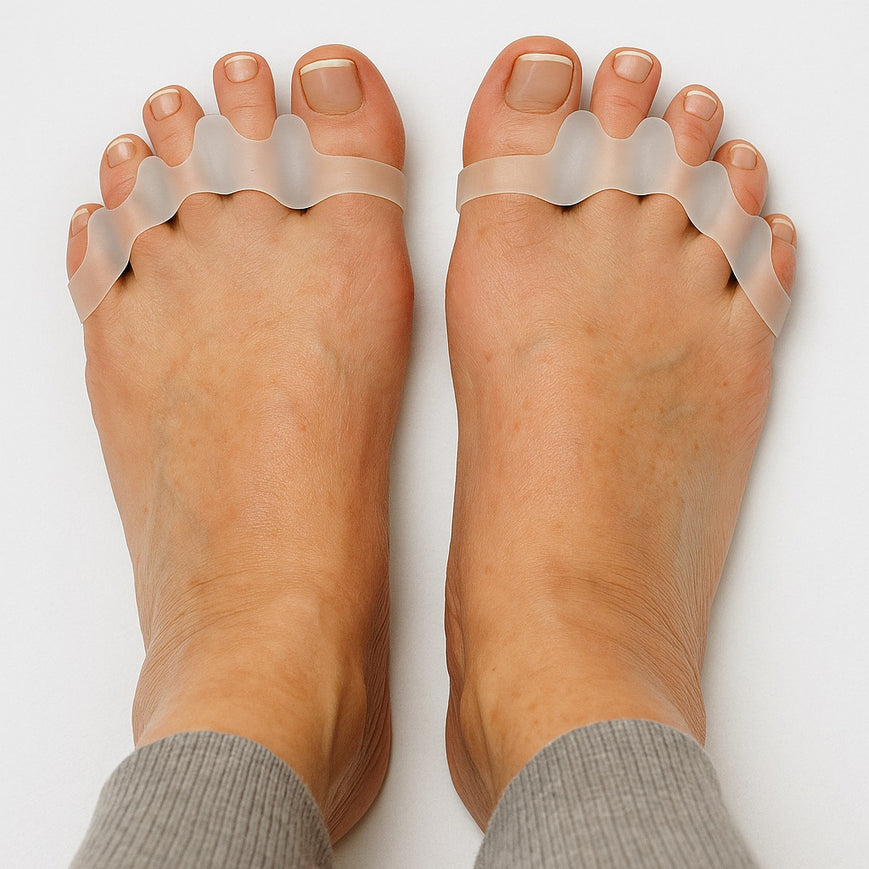
DuraFlex Gel Toe Separators
View Product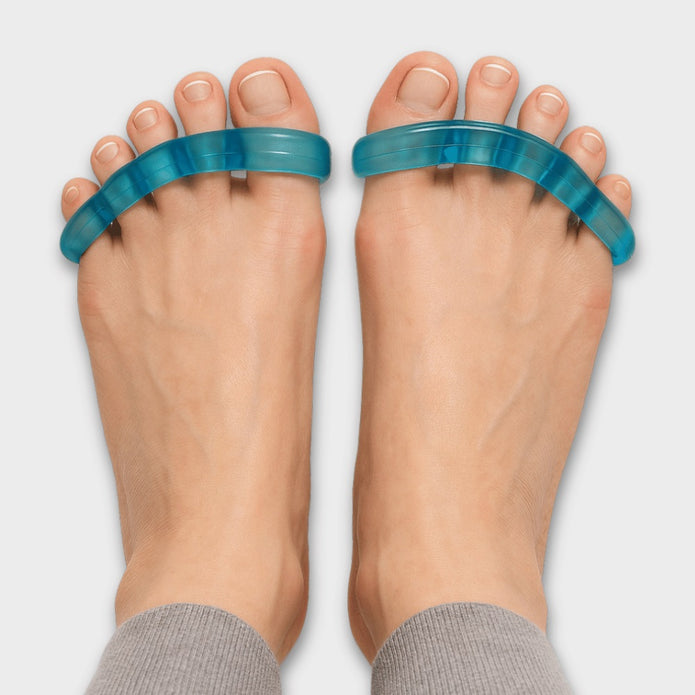
Home Gel Toe Separators
View Product6. Bunions – Prevention vs Correction
One of the key issues mentioned is the development of bunions and how toe alignment plays a major role in their progression. A bunion is not simply a bump on the side of the foot - it’s a gradual structural change in the position of the big toe and the joint at its base.
He further explains that toe spacers are most effective as a preventive or supportive strategy rather than a complete reversal method.
“Toe spacers can help prevent that and hopefully avoid it from getting any worse.”
This is an important distinction because many people look for quick fixes once bunions become severe.
Toe spacers are better understood as a way to:
- Reduce compressive forces
- Encourage healthier toe alignment
- Relieve tension between the toes
- Improve toe mobility
- Slow progression over time
For mild to moderate alignment issues, consistent use may help restore some natural toe spacing and improve comfort. Toe spacers should be used as preventive support rather than a miracle cure.
7. How to Start Using Toe Spacers Safely
Gradual adaptation is essential and Dr. Daniel Birch strongly recommends easing into use.
Suggested Progression:
- Start with 5-10 minutes daily
- Use them barefoot at home
- Increase duration gradually
- Expect some discomfort initially
“You will have discomfort with these…they can quite irritate the toes initially.”
While they can be incredibly beneficial for improving toe alignment and relieving built-up tension in the feet, your muscles, joints and connective tissues need time to adjust, especially if your feet have spent years in narrow or restrictive footwear.
This gradual approach allows the toes to gently spread back into a more natural position without overwhelming the tissues of the foot.
8. Strengthening Exercises Matter Too
While toe spacers can help improve toe alignment and reduce tension in the feet, Dr. Daniel Birch makes it clear that long-term improvement also requires strengthening the muscles that support the foot.
Simply repositioning the toes without retraining the muscles may provide temporary relief, but it won’t fully restore healthy foot mechanics on its own.
The “Short Foot” Exercise
One of the key exercises mentioned is the short foot exercise, which focuses on strengthening the arch of the foot.
This exercise teaches the foot to:
- Activate the intrinsic arch muscles
- Maintain stability
- Support proper alignment
Rather than curling the toes, the movement involves gently shortening the foot by lifting the arch while keeping the toes relaxed and grounded.
Intrinsic Foot Strengthening
He also refers to intrinsic foot strengthening exercises which target the small muscles inside the foot itself.
These muscles play a major role in:
- Stabilising the toes
- Supporting the arch
- Absorbing force during movement
- Maintaining proper foot alignment
Unfortunately, many people lose strength in these muscles due to years of wearing supportive or restrictive shoes that limit natural foot movement.
Examples of intrinsic foot exercises:
- Toe spreading
- Towel scrunches
- Controlled toe lifts
- Balance work
- Barefoot mobility drills
Strengthening these smaller muscles can improve both comfort and performance in daily movement.
Big Toe Mobility and Strength
Another major focus is the big toe, which is essential for walking efficiency and balance.
The big toe helps generate force during push-off when walking or running. If it becomes stiff or angled inward, the foot loses part of its natural stability and propulsion.
Improving big toe mobility can:
- Increase walking efficiency
- Improve balance
- Reduce strain on the arch and ankle
- Support better posture and movement patterns
This is especially important for people dealing with bunions, collapsed arches or stiffness in the forefoot.
Toe spacers passively reposition the foot, but strengthening retrains muscular control and stability.
9. Transitioning to Better Footwear
Dr. Daniel Birch emphasises that wide toe box shoes are the long-term solution. He mentions brands such as Vivo Barefoot, Lems, Hoka and Altra.
The focus is not necessarily minimalist shoes, but shoes with:
- Wider toe boxes
- Less inward toe angulation
- More natural foot positioning
He explains that traditional shoes often encourage the big toe to angle inward, which disrupts the natural “tripod” support system of the foot.
“You don’t have as much of that angulation of that first toe coming in and you have more room for that foot.”
In contrast, healthier footwear allows the toes to spread naturally and supports a more stable foundation during walking and standing.
10. Important Warning for Runners
Don’t Rush the Transition – One of the most important cautions is directed toward runners and highly active individuals.
While wider toe-box or minimalist shoes can offer significant benefits for foot health and natural movement, transitioning too quickly can place unexpected stress on the body.
“Especially if you're a runner, don't just jump into them slowly build up time with them.”
This warning is important because running places repetitive force through the feet, ankles, calves and knees.
Any major change in footwear – particularly one that alters foot mechanics – can dramatically change how those forces are distributed throughout the body.


Leave a comment