Which Flat Feet Insole Is Right for Me?
Flat feet insoles vary considerably in firmness, shape and thickness. Some focus on gentle everyday cushioning, while others use a rigid or semi-rigid frame to provide more structured support.
Structured and Orthotic Flat Feet Insoles
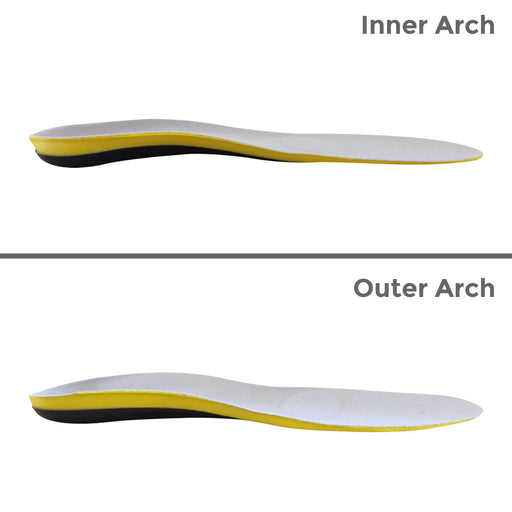
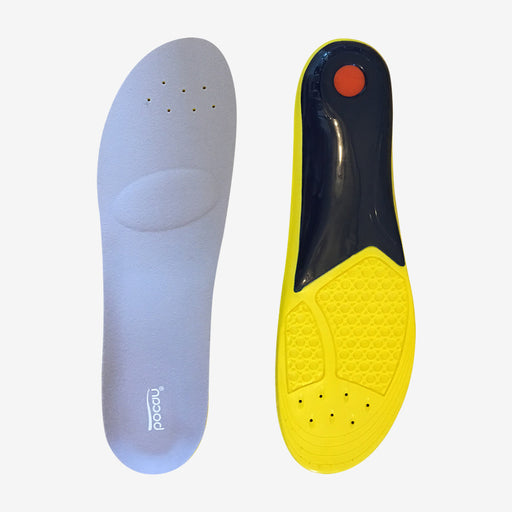
Structured insoles contain a solid frame beneath the heel and arch that helps them retain their shape under body weight. A deep heel cup may also be present to hold the rear of the foot more securely.
They provide more noticeable support than soft foam alone and may suit people experiencing arch fatigue, painful fallen arches or excessive inward rolling of the feet. The arch should feel supportive without pressing sharply against the sole.
Best suited to:
- Firmer arch and heel support
- Painful flat feet or fallen arches
- Feet that roll excessively inwards
- People who need firmer support that retains its shape
- Trainers, work shoes and supportive everyday footwear
Cushioned Arch Support Insoles
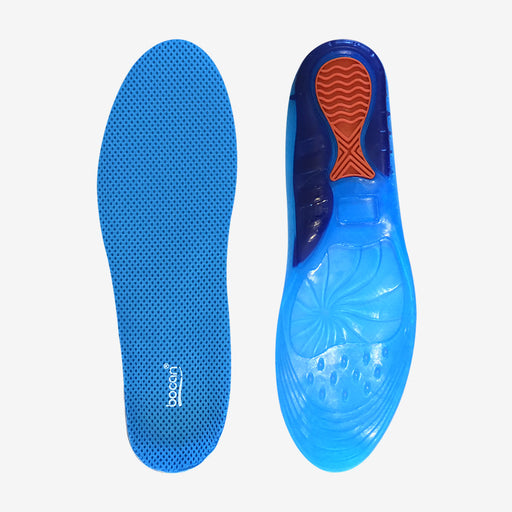
Cushioned insoles use foam, gel or memory foam to soften impact beneath the feet while providing gentle or moderate support through the arch.
They may be more comfortable for people who dislike a firm orthotic sensation or primarily want relief from tired, aching feet. However, soft cushioning can compress more readily and generally provides less structured support than an orthotic frame.
Best suited to:
- Everyday comfort
- Tired or aching feet
- Walking or standing for long periods
- People who prefer softer support
- Footwear with a firm or thin footbed
Full-Length and Trimmable Insoles
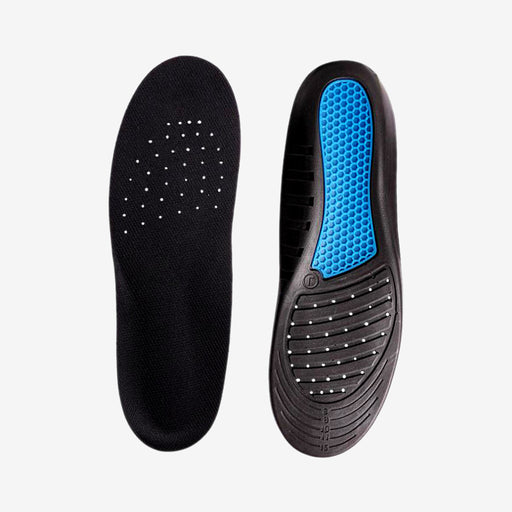
Full-length insoles run beneath the entire foot, from the heel through to the toes. They provide arch support while adding cushioning across the heel, midfoot and forefoot.
Trimmable designs can be shaped around the front to match the shoe’s original insole. They are generally most suitable for trainers, work shoes and other enclosed footwear with a removable footbed.
Best suited to:
- Support and cushioning across the whole sole
- Everyday walking and prolonged standing
- Shoes with removable insoles
- People who want a complete replacement footbed
Half-Length Flat Feet Insoles
Half-length insoles sit beneath the heel and arch but stop before the forefoot. Their compact design uses less space inside the shoe, making them suitable for footwear with a fixed footbed or limited room around the toes. They should lie flat and stable, without creating a raised edge or uncomfortable pressure beneath the foot.
Best suited to:
- Targeted heel and arch support
- Shoes with limited space beneath the forefoot
- Footwear with a non-removable insole
- People who do not require forefoot cushioning
Overpronation Insoles
Flat feet describe the shape of the arch, while overpronation refers to excessive inward rolling during movement. The two can occur together, but not every person with flat feet overpronates.
If your feet and ankles visibly roll inwards, a more structured insole with firm inner-arch support and a stable heel cup may be preferable to a simple cushioned design.
Best suited to:
- Excessive inward foot movement
- Uneven wear along the inside of footwear
- People wanting firmer rear-foot stability
- Flat feet accompanied by overpronation
Sports and Running Insoles
For running and other high-impact activities, sports insoles with good arch support combined with shock-absorbing foam, gel or a structured frame can help cushion repeated impact and improve stability inside trainers.
Choose a design that stays securely in place, and introduce it gradually before wearing it for running, jumping or longer exercise sessions.
Best suited to:
- Running, gym work and fitness activities
- Repeated impact
- Sports footwear
- Active people who experience arch fatigue
Children’s Flat Feet Insoles
Children’s insoles are sized and shaped specifically for growing feet. They may be considered where flat feet are associated with pain, difficulty walking, repeated injuries or another concern identified by a healthcare professional.
Flat feet are normal in many young children, and arches commonly develop between approximately three and ten years of age. A child with painful flat feet that does not affect activity will not usually need treatment simply to change the appearance of the arch.
Best suited to:
- Children experiencing symptoms linked to flat feet
- School shoes and supportive trainers
- Use following professional advice
- Designs that can be regularly checked as the child grows