Skip to content

Running Insoles

Running insoles provide additional cushioning and support inside trainers, helping your feet stay comfortable through repeated strides and longer distances. Our collection includes shock-absorbing, structured arch-support and orthotic designs for different foot shapes and running needs.

  • SoleRelief Flat Feet Insoles

    Original price £14.99 - Original price £14.99
    Original price
    £14.99
    £14.99 - £14.99
    Current price £14.99

    Provides optimal heel and arch support Relieves foot aches and pain by incorporating a lifted arch and cushioned heel cup Absorbs shocks and impac...

    View full details
  • SoleRelief Flat Feet Half Insoles

    Original price £12.99 - Original price £12.99
    Original price
    £12.99
    £12.99 - £12.99
    Current price £12.99

    Provides optimal support for the heel and arch to relieve foot aches and pain Ergonomic arch support (2.5cm high) Deep heel cup ensures stability ...

    View full details
  • Elevator Heel Lift Insoles

    Original price £24.99 - Original price £24.99
    Original price
    £24.99
    £24.99 - £24.99
    Current price £24.99

    Designed to treat leg length discrepancy quickly and easily Increases your height to alleviate pressure and pain Can also be worn to look taller a...

    View full details
  • PeakPro Arch Support Running Insoles

    Original price £24.99 - Original price £24.99
    Original price
    £24.99
    £24.99 - £24.99
    Current price £24.99

    High density and low compression PORON® foam layer provides optimal shock absorption and sustained comfort Solid heel and arch frame construction ...

    View full details
  • PeakPro Shock Absorbing Sports Insoles

    Original price £14.99 - Original price £14.99
    Original price
    £14.99
    £14.99 - £14.99
    Current price £14.99

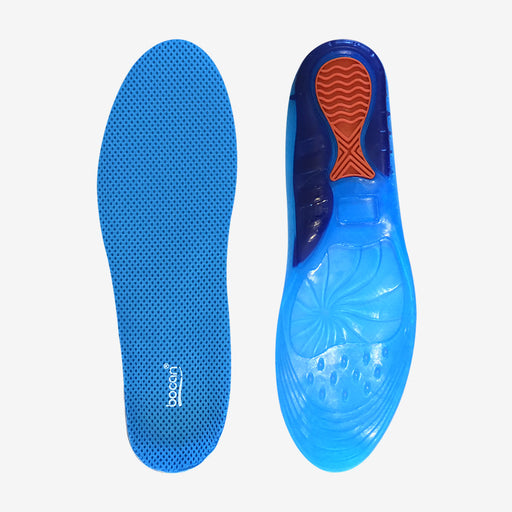
    Maximum shock absorption due to its all gel construction Gel bubbles at the heel and metatarsal region to absorb micro-shocks Mid-height arch supp...

    View full details
  • PeakPro Orthotic Sports Insoles

    Original price £16.99 - Original price £16.99
    Original price
    £16.99
    £16.99 - £16.99
    Current price £16.99

    All gel construction provides enhanced shock absorption and impact cushioning Optimal high arch support for better natural movement and foot suppo...

    View full details
  • Shock Absorbing Sports Insoles

    Original price £22.99 - Original price £22.99
    Original price
    £22.99
    £22.99 - £22.99
    Current price £22.99

    Minimises sporting injuries and increases comfort and stability with an all gel foundation that’s designed to absorb consistent shocks and impact ...

    View full details
  • SoleRelief Memory Foam Insoles

    Original price £14.99 - Original price £14.99
    Original price
    £14.99
    £14.99 - £14.99
    Current price £14.99

    Shock-absorbing memory foam cushions your feet with each step Reduces stress on your ankles, knees and lower back by effectively distributing body...

    View full details
  • Powerstep Pinnacle Insoles

    Original price £54.99 - Original price £54.99
    Original price
    £54.99
    £54.99 - £54.99
    Current price £54.99

    Prevents and relieves foot pain and symptoms relating to plantar fasciitis, flat feet, overpronation and other common foot conditions Designed to ...

    View full details
  • Powerstep Original Insoles

    Original price £49.99 - Original price £49.99
    Original price
    £49.99
    £49.99 - £49.99
    Current price £49.99

    Relieves foot pain associated with conditions including plantar fasciitis, flat feet, Achilles Tendonitis, ankle, knee and hip and lower back pain...

    View full details
  • Dr Scholl's 24-Hour Energy Multipurpose Insoles

    Original price £24.99 - Original price £24.99
    Original price
    £24.99
    £24.99 - £24.99
    Current price £24.99

    Keeps You Energised All Day – Clinically proven to help reduce foot fatigue and provide an energising boost with every step Helps Relieve Tired,...

    View full details

Running Insoles Buying Guide

Running repeatedly loads the feet through each stride, so the right combination of footwear, cushioning and support can make a noticeable difference to comfort. Running insoles sit inside your trainers to supplement or replace the existing footbed, depending on the design and available space.

Some focus primarily on absorbing impact, while others use a firmer heel-and-arch structure to provide greater support beneath the foot.

A good pair of running shoes remains the starting point. Athletic footwear should fit securely, provide adequate room for the foot and accommodate any additional insole without becoming cramped.

Which Running Insole Is Right for Me?

Different runners prioritise different things. The amount of cushioning you prefer, your arch shape, the support already provided by your trainers and the distances you run can all influence which design feels most suitable.

Shock-Absorbing Running Insoles

Gel, foam and other resilient materials provide an additional cushioning layer between the foot and shoe.

Some designs concentrate softer material beneath the heel and forefoot, where repeated ground contact occurs, while others provide cushioning across the whole sole.

May suit:

  • Runners wanting additional underfoot cushioning
  • Trainers with a firm or thin original footbed
  • Longer sessions where foot fatigue becomes noticeable
  • People who prefer a softer feel beneath the sole

Structured Arch-Support Running Insoles

A firmer frame beneath the heel and arch retains its shape more effectively than soft cushioning alone.

This type of construction can provide a more supportive platform inside the trainer while cushioning materials above or around the frame soften the feel underfoot.

May suit:

  • Runners wanting stronger arch support
  • Longer or more frequent runs
  • Feet that feel insufficiently supported by standard trainer liners
  • People who prefer a firmer, more structured feel

Orthotic Running Insoles

Orthotic-style insoles use more pronounced shaping around the arch and heel. Features may include a deeper heel cup, raised arch contour and firmer supporting base.

They can provide greater structure for runners who want more than general-purpose cushioning. Some models within the collection combine high arch support and a deep heel cup with gel cushioning to balance structure and impact comfort.

May suit:

  • More noticeable heel and arch support
  • Runners who find flat insoles insufficient
  • Specific foot-support requirements
  • Trainers with enough depth for a structured footbed

Condition-Focused Running Insoles

Some runners choose insoles because they have a particular foot shape, movement pattern or existing area of discomfort rather than simply wanting extra cushioning.

If a specific condition is your main concern, consider the support requirements of that condition as well as whether the product is suitable for running.

What to Look for in Running Insoles

Running insoles need to remain comfortable and securely positioned through repeated movement. Pay particular attention to the following features when comparing designs.

Resilient Cushioning

Running cushioning should provide comfort without compressing so quickly that the insole loses its supportive feel.

Materials such as gel and high-density foam are commonly used in our current range. PORON® foam is used in the dedicated PeakPro Running Insoles, while several sports-oriented designs use gel to provide impact cushioning.

The softest option is not automatically the best. Your foot should still feel stable inside the trainer rather than sinking excessively into the insole.

Appropriate Arch Support

The arch contour should make comfortable contact beneath the middle of the foot without creating a concentrated pressure point.

Some runners prefer moderate shaping that allows greater flexibility, while others feel more comfortable with a firmer supporting frame. The correct level depends on your arch shape, symptoms and the support already built into your footwear.

Secure Heel Position

A shaped heel section can help keep the rear of the foot centred over the insole.

Deeper heel cups and more structured frames generally require additional room inside the trainer, so check that fitting the insole does not push your heel too high towards the shoe opening.

Enough Room Inside the Trainer

An insole changes the amount of internal space available to your foot. Where possible, full-length replacement insoles are often easier to accommodate in trainers with removable liners.

NHS footwear guidance also recommends sufficient shoe depth and room when orthoses are being worn.

After fitting the insole, your toes should still have adequate space and your heel should remain securely contained.

A Stable, Flat Fit

The insole should sit smoothly against the bottom of the trainer without curling or moving.

A poorly fitted insole can shift during running, so check that the length and width correspond closely to the interior of the shoe.

Trimmable designs can be useful where small adjustments are needed around the forefoot.

How Running Insoles May Help

Running insoles are designed to complement suitable footwear rather than transform running technique or guarantee protection from injury.

  • Add Cushioning Beneath Repeated Impact – Additional foam or gel can soften the surface beneath the heel and forefoot, which may improve comfort when running in trainers with limited built-in cushioning.
  • Provide a More Supportive Base – A contoured arch and stable heel section can give the foot a firmer platform inside the shoe. Orthotic insoles are commonly used to provide support and redistribute pressure beneath the feet, although individual responses vary.
  • Improve Comfort Over Longer Distances – As distance increases, small differences in shoe fit, cushioning and support may become more noticeable. A suitable insole can supplement the trainer's existing footbed and help it remain comfortable for your regular running routine.

Insoles should not be viewed as a guaranteed way to run faster or prevent injuries. Training load, footwear, strength, running history and many other factors can influence comfort and injury risk.

Choosing Running Insoles for Your Foot Type

If your feet have a particular structural or movement characteristic, this may influence the type of support you prefer.

Flat Feet

People with low or fallen arches may prefer an insole with broader contact beneath the mid-foot rather than a flat cushioned insert.

A more structured heel-and-arch design may provide a supportive surface inside the trainer, particularly when the shoe's original liner offers very little shape.

Overpronation

Pronation is a normal part of walking and running. When inward movement becomes excessive or symptomatic, some runners use structured insoles to provide additional support beneath the arch and rear of the foot.

If overpronation is your main concern, a dedicated overpronation insole may provide a more targeted starting point.

High Arches

A higher arch may require a more raised contour to make comfortable contact beneath the midfoot.

Cushioning can also be important when the foot places greater pressure through the heel and forefoot. Choose a contour that supports your existing arch without pressing uncomfortably into it.

Plantar Fasciitis

Plantar fasciitis commonly causes discomfort around the heel and arch. NHS guidance recommends supportive footwear with cushioned heels and good arch support, and notes that insoles or heel pads may form part of self-care.

If plantar fascia discomfort is your main reason for buying, consider a dedicated plantar fasciitis insole rather than selecting purely according to running performance.

How to Fit Running Insoles

Correct fitting is particularly important for running because the foot is repeatedly moving and loading inside the trainer.

Replace the Existing Footbed Where Appropriate

For a substantial full-length insole, remove the trainer's original removable liner first where appropriate.

This usually creates more internal space and allows the replacement to lie closer to the base of the shoe. Trainers with removable liners are particularly suitable when extra orthotic support needs to be accommodated.

Trim the Forefoot Carefully

If your insoles are designed to be trimmed, compare them with the trainer's original footbed before cutting.

Use the old liner as a guide and remove small amounts around the toe area until the new insole sits smoothly inside the shoe. Avoid cutting into a structured arch, heel cup or supporting frame unless the manufacturer's instructions allow it.

Test Them Before Running

Put the trainers on and walk around indoors first.

Check that:

  • The heel remains securely positioned
  • Your toes still have sufficient room
  • The arch support sits beneath the correct area
  • The insole does not slide or bunch
  • The trainer can still be fastened comfortably

Build Up Your Running Gradually

Even when a new insole feels comfortable immediately, it can alter the support and pressure beneath your feet.

We recommend introducing unfamiliar insoles progressively rather than immediately wearing them for prolonged or demanding activity.

Start with walking and shorter runs before using them for longer distances or harder training sessions.

Pay Attention to Changes in Comfort

A different footbed can take a little time to become familiar, but it should not create persistent soreness, rubbing or new areas of pain.

If discomfort continues, your symptoms become worse or you feel less stable while running, stop using the insoles and consider advice from a podiatrist, physiotherapist or other qualified healthcare professional.

Running Insoles or Sports Insoles?

The two categories overlap considerably, but their focus is slightly different.

  • Running insoles are selected specifically for repeated forward movement and may place greater emphasis on resilient cushioning, secure heel positioning and support that remains comfortable over repeated strides.
  • Sports insoles cover a wider variety of activities, including gym training, walking, court sports and general fitness. Different sports can involve jumping, lateral movement or changes of direction that are not as central to ordinary running.

If running is your main activity, start with our Running Insoles range. If you participate in several different activities and want a more general-purpose option, browse the wider Sports Insoles collection.

Frequently Asked Questions

What are running insoles?

Running insoles are inserts worn inside running shoes to add cushioning, arch support, heel stability or pressure distribution.

They range from softer shock-absorbing designs to firmer orthotic models with structured support beneath the heel and arch.

Do I need special insoles for running?

Not every runner needs additional insoles. A properly fitting running shoe may already provide the comfort and support you require.

Extra insoles may be useful when you want additional cushioning, require more structured support or have a specific foot-related need that the trainer's standard liner does not address. Athletic footwear should still be appropriately fitted before additional orthoses are considered.

Should running insoles be soft or firm?

Neither is automatically better. Softer designs prioritise cushioning, whereas firmer structures provide more noticeable support beneath the heel and arch. Many running insoles combine a structured base with shock-absorbing material to provide elements of both.

Can running insoles help with plantar fasciitis?

Insoles may form part of plantar fasciitis management by providing arch support or heel cushioning. NHS guidance includes cushioned footwear, arch support and shoe insoles among commonly recommended self-care measures.

They should generally be combined with other appropriate measures rather than treated as a stand-alone cure.

Can I use sports insoles for running?

Yes, provided the particular design fits securely inside your trainers and remains comfortable during repeated strides.
For runners covering longer distances or running regularly, a dedicated running design may offer a more focused combination of cushioning and support.

Should I remove the original insoles from my running shoes?

For most substantial full-length replacements, removing the trainer's removable footbed creates more space and usually provides a better fit.

If the existing liner is fixed, check that adding another insole does not crowd the toes or raise your heel too far inside the shoe.

Should I wear new insoles on a long run straight away?

It is better to introduce unfamiliar insoles gradually.

Wear them while walking first, then try shorter runs before progressing to your usual distance. Gradual introduction gives your feet time to adapt to the different support and pressure beneath them.