
How to Correct Overpronation - 5 Science-Backed Steps
Overpronation has become one of the most debated topics in running, rehabilitation and footwear design. Some experts argue it’s a major contributor to injury, while others believe it’s often misunderstood and over-corrected.
This video by “Barefoot Strength” takes a strong middle-ground approach – pronation itself is natural – but losing control of it is where problems begin.
In this article we provide a detailed analysis of the key ideas, what the science suggests, and where the advice is especially useful for runners and active people.
Pronation Isn’t the Enemy
One of the strongest points in the video is the distinction between normal pronation and overpronation.
“Pronation is a natural foot motion that helps absorb harsh impact forces…”
This is biomechanically accurate. Pronation allows the foot to become flexible during ground contact, helping dissipate force through the ankle, knee and hip.
The problem arises when:
- The arch collapses excessively
- The foot remains pronated too long
- Muscles fail to control the movement efficiently
The video correctly frames overpronation as a loss of control, not simply a flat foot.
That nuance matters because many people have naturally low arches without pain or dysfunction.
The Foot Strength Argument Is Compelling
The first major recommendation in the video focuses on strengthening intrinsic foot muscles.
“If you want to pronate less, you have to strengthen your feet to be more resistant to fatigue.”
This aligns with emerging sports science research. Modern footwear often reduces demand on the smaller stabilising muscles of the foot, potentially contributing to weakness over time.
The video highlights a critical concept:
Fatigue changes biomechanics
As muscles tire:
- Arch stability decreases
- Balance worsens
- Joint positioning becomes less efficient
This is especially relevant for distance runners, hikers, people standing all day and athletes training on hard surfaces.
The progression-based exercise approach described in the video is particularly smart because it emphasises:
- Awareness
- Balance
- Resistance against pronation forces
Rather than simply “building arches,” the strategy focuses on improving neuromuscular control.
Orthotics: Helpful Tool or Long-Term Crutch?
The video takes a balanced position on orthotics:
“Arch supporting insoles can be helpful as an assistive tool, but the end goal should always be to develop strong enough feet to no longer need artificial support.”
This is one of the most evidence-based sections. Research generally shows that orthotics can reduce pain, improve comfort and temporarily alter foot mechanics.
But they do not necessarily fix the underlying causes of dysfunction.
For some people, especially runners with heavy training loads, orthotics may reduce stress enough to continue activity safely.
However, relying exclusively on support without strengthening the foot may limit long-term adaptation.
The video wisely avoids an “orthotics are bad” narrative and instead frames them as recovery tools, temporary assistance and situational support – that’s a much more sensible perspective.
Best Insoles for Overpronation
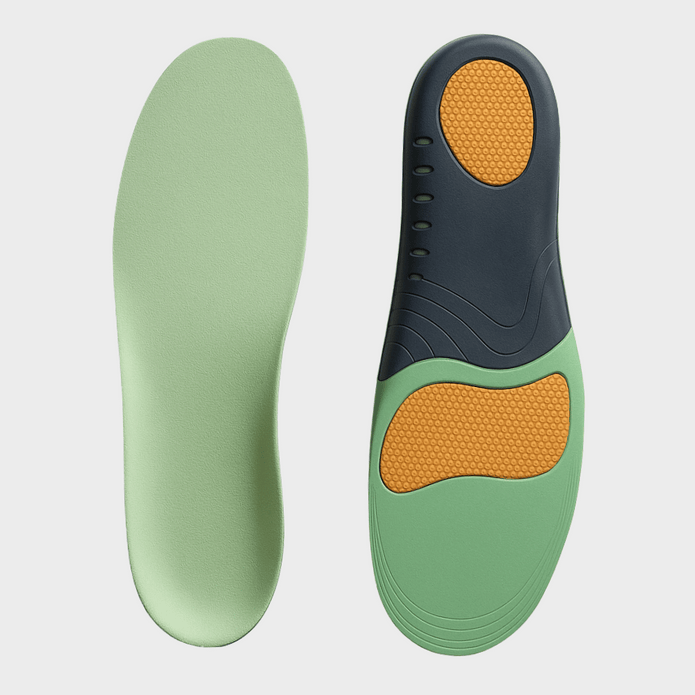
UltraSupport Plantar Fasciitis Insoles
View Product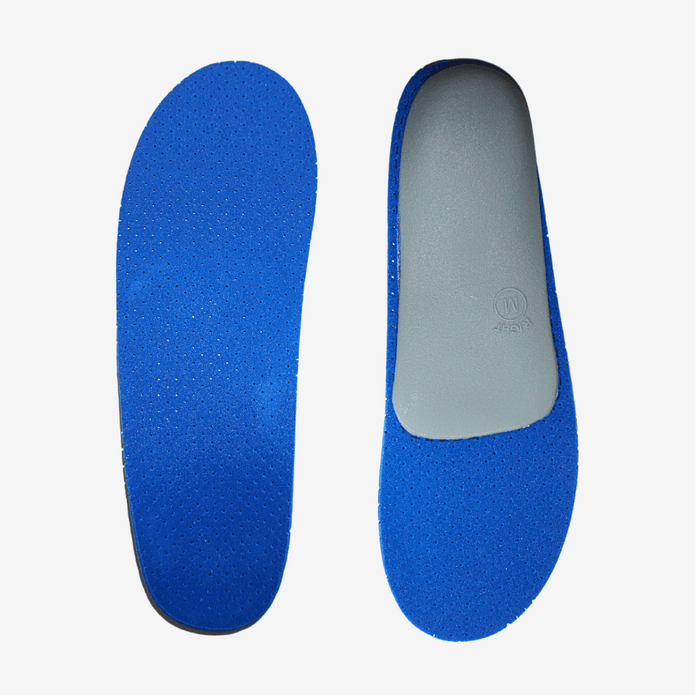

SoleRelief Orthotic Overpronation Insoles
View ProductToe Alignment and Bunions
The discussion about toe alignment is surprisingly important.
“All the intrinsic foot muscles that help support the foot arch and stabilise the ankles are tethered to the toes.”
This is anatomically true. The big toe plays a massive role in:
- Balance
- Propulsion
- Arch stabilisation
- Walking efficiency
When bunions distort alignment, force transfer changes throughout the foot. The video connects this to weakness in the abductor hallucis muscle – a key stabiliser of the medial arch.
While toe spacers are becoming increasingly popular, the evidence is still evolving. However, combining toe mobility, wider shoes, foot strengthening and reduced toe compression likely provides meaningful benefits for many people.
The long-term timeline mentioned in the video is also realistic.
“Do this consistently every day for at least 12 months.”
Structural adaptations take time.
The Barefoot Shoe Philosophy
The video strongly favours minimalist footwear characteristics:
- Wide toe box
- Thin sole
- Flexible sole
- Zero drop
These recommendations reflect the modern “natural movement” philosophy. The reasoning is logical:
- More toe splay = better stability
- More sensory feedback = faster corrections
- Less structure = more muscular engagement
However, this section deserves nuance. Minimalist footwear can be beneficial for:
- Strengthening foot muscles
- Improving proprioception
- Encouraging mid-foot loading
But transitioning too quickly can increase injury risk, particularly in the calves, Achilles tendon and metatarsals.
The video assumes the body can adapt smoothly, but many runners require gradual progression.
A safer recommendation would include:
- Slow adaptation
- Reduced mileage initially
- Strength work alongside transition
The Forefoot vs Heel Strike Debate
“While forefoot strikers pronate more, heel strikers tend to overpronate.”
The video presents a nuanced distinction:
- More motion does not necessarily mean more dysfunction
- Forefoot striking may distribute forces differently
- Heel striking may create larger peak pronation angles
This reflects modern biomechanics better than simplistic “heel striking is bad” arguments.
The cadence advice is especially practical:
“Set the BPM between 160 and 180.”
Increasing cadence often:
- Reduces overstriding
- Lowers braking forces
- Improves landing mechanics
This is one of the most evidence-supported running modifications available. However, forefoot striking is not universally superior. Elite runners use a variety of strike patterns successfully.
What matters more is: load management, efficiency, comfort and injury history.

The Glute Connection
The final section may actually be the strongest.
“Your overpronation may not be caused by your feet…but could be a result of weak glutes.”
This reflects the modern kinetic chain model of movement.
Weak glutes can influence:
- Femur rotation
- Knee collapse
- Tibial rotation
- Foot position
The video demonstrates this chain reaction clearly through the standing example. This is critical because many foot problems are actually upstream problems.
Treating only the foot while ignoring hip strength, pelvic control and core stability often produces incomplete results.
The cited improvement when combining glute and foot strengthening makes biomechanical sense:
- Feet provide the foundation
- Glutes control alignment above
Together, they stabilise the entire lower limb.
A Modern, Balanced View of Overpronation
This video is sensible and realistic because it avoids extreme positions.
It does not claim:
- Pronation is inherently bad
- Everyone needs orthotics
- Barefoot shoes magically fix everything
- One running style works for everyone
Instead, it frames overpronation as a multifactorial issue involving: foot strength, toe alignment, footwear, running mechanics and hip stability.
That systems-based perspective is far more useful than simplistic “flat feet are broken” narratives.
Overpronation is rarely just a foot problem; it’s often a movement-control problem involving the entire lower body, and improving it usually requires: better strength, better coordination, better awareness and smarter training progression – not just more support under the arch.


Leave a comment