Frequently Asked Questions About High Arches
What are high arches?
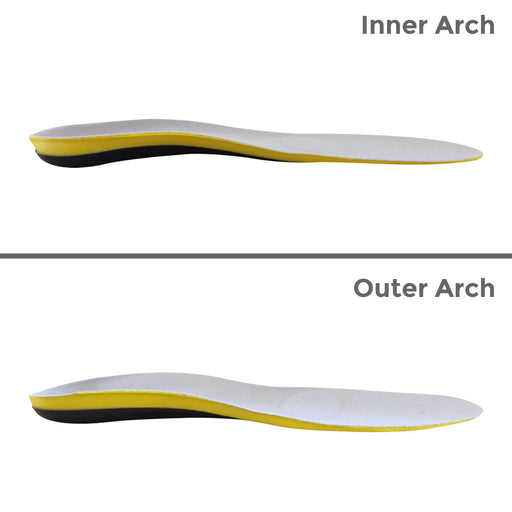
High arches describe a foot shape where the inner arch remains noticeably raised while standing. The medical term commonly used is pes cavus or a cavus foot.
Some people have naturally high arches without any symptoms, while others experience pain, pressure or instability.
Do high arches need treatment?
Not always.
If your feet are comfortable and high arches do not affect walking, exercise or balance, treatment may not be necessary.
Support becomes more relevant when the foot shape is associated with discomfort, pressure areas, repeated ankle problems or difficulty with everyday activity.
Can insoles help high arches?
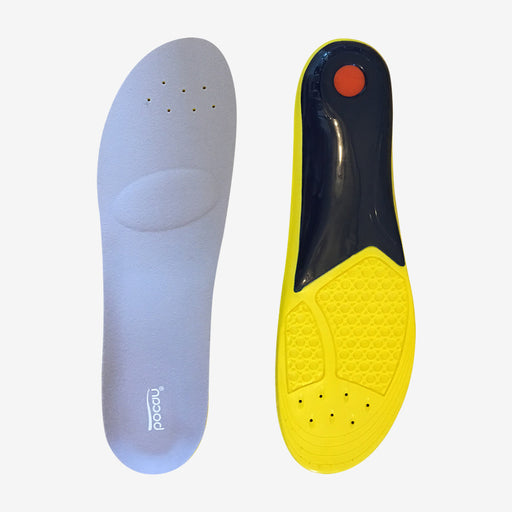
They may help improve comfort by supporting the arch, cushioning the foot and distributing pressure more evenly.
For example, orthotic insoles may be used to reduce stress associated with a high-arched foot, particularly when heel pain is present.
The shape and firmness should feel comfortable rather than creating excessive pressure beneath the arch.
What type of insole is best for high arches?
The best design depends on your symptoms and footwear.
A full-length cushioned insole provides broader support beneath the heel, arch and forefoot. A half-length insole takes up less shoe space, while firmer orthotic designs provide more noticeable structure.
For running or sport, shock absorption may be particularly important.
Are high arches the same as supination?
No. High arches refer to the height and shape of the arch, while supination relates to movement and pressure distribution through the outer side of the foot.
The two can occur together, but not everyone with high arches excessively supinates.
Can high arches cause plantar fasciitis?
High arches are one of several factors associated with plantar fasciitis. A high-arched foot may absorb walking stresses differently, increasing strain through the heel and plantar fascia in some people.
However, having high arches does not mean that you will necessarily develop plantar fasciitis.
Can high arches cause ball-of-foot pain?
They can contribute. High arches may concentrate more pressure beneath the forefoot, and they are recognised as one factor associated with metatarsalgia, or pain around the ball of the foot.
Suitable cushioning and footwear may help reduce pressure in this area.
When should i seek professional advice?
Consider seeing a podiatrist, physiotherapist or GP if high arches are causing persistent pain, difficulty walking, repeated ankle instability or significant pressure areas.
Professional assessment is also sensible if the shape of your feet is progressively changing, differs considerably between the two sides, or occurs alongside weakness or other neurological symptoms, as some forms of pes cavus can have an underlying medical cause.