Skip to content

Supination

Supination, also known as underpronation, can place additional pressure along the outside of the foot and may contribute to discomfort or instability during walking and exercise. Our collection includes supination insoles, orthotic supports, cushioning inserts and massage products designed to improve support and everyday comfort.

  • Plantar Fasciitis Orthotic Inserts

    Original price £29.99 - Original price £29.99
    Original price
    £29.99
    £29.99 - £29.99
    Current price £29.99

    Alleviates the intense pain and discomfort caused by plantar fasciitis and overpronation by supporting the arch and heel The strong hard base of t...

    View full details
  • ComfortHeel Height Increase Half Insoles

    Original price £13.99 - Original price £13.99
    Original price
    £13.99
    £13.99 - £13.99
    Current price £13.99

    Increases your height comfortably by 2cm (small) or 2.5cm (large) – look taller and boost confidence Half insole design provides support to the he...

    View full details
  • SoleRelief Double-Sided Supination Insoles

    Original price £9.99 - Original price £9.99
    Original price
    £9.99
    £9.99 - £9.99
    Current price £9.99

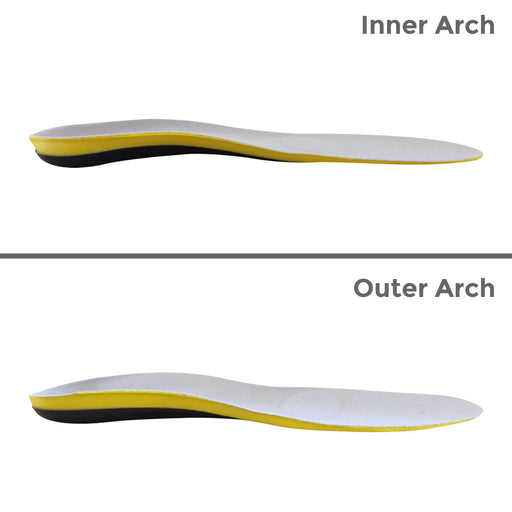
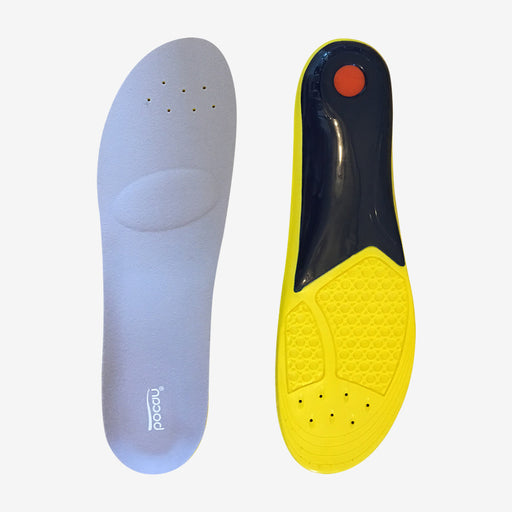
    Has an approx. 1cm raise to stop the feet from excessively rolling outwards Rebalances the weight of your feet to the centre Foam mid-layer that a...

    View full details
  • Comfier Shiatsu Heated Foot Massager

    Original price £89.99 - Original price £89.99
    Original price
    £89.99
    £89.99 - £89.99
    Current price £89.99

    Relieves stress and tension in the feet, while boosting serotonin levels Incorporates Shiatsu rollers that imitates a centuries old Japanese massa...

    View full details
  • Trimmable Plantar Fasciitis Orthotic Insoles

    Original price £32.99
    Original price £32.99 - Original price £32.99
    Original price £32.99
    £24.99 - £32.99
    £24.99 - £32.99
    Current price £24.99

    Relieves pain and treats plantar fasciitis, flat feet and overpronation with a balanced rigid and cushioned construction Hard orthotic heel and ar...

    View full details
  • Comfier Electric Heated Foot Warmer

    Original price £74.99 - Original price £74.99
    Original price
    £74.99
    £74.99 - £74.99
    Current price £74.99

    Promotes blood circulation and body warmth while elevating your mood and serotonin levels Reduces joint stiffness, tissue damage and muscle spasms...

    View full details
  • HoMedics Dual Shiatsu Heated Foot Massager

    Original price £69.99 - Original price £69.99
    Original price
    £69.99
    £69.99 - £69.99
    Current price £69.99

    Relieves stress and soothes tired, aching feet Boosts serotonin levels which plays a major role in your mood, digestion, sexual desire, healing an...

    View full details
  • HoMedics NOVO Mini Massage Gun

    Original price £59.99
    Original price £59.99 - Original price £59.99
    Original price £59.99
    Current price £47.99
    £47.99 - £47.99
    Current price £47.99

    Reduces muscle tension, treats muscle knots and increases blood circulation Relieves pain and soreness after workouts or a physically tiring day I...

    View full details

Supination Buying Guide

Supination is part of the foot's normal movement during walking and running. Problems can arise when the foot does not roll inwards sufficiently after landing, leaving more weight concentrated towards the outer edge of the foot. This excessive pattern is commonly referred to as underpronation or excessive supination.

Not everyone who supinates experiences discomfort or requires treatment. Support products become more relevant when the movement is associated with foot fatigue, pressure along the outside of the foot, ankle instability or discomfort during walking and exercise.

High arches are commonly associated with increased pressure around the outside and ball of the foot, although having high arches does not automatically mean that you excessively supinate.

What Products Can Help With Supination?

The most suitable product depends on your movement pattern, arch shape, footwear and where you experience discomfort.

Supination Insoles

Supination insoles are designed specifically for feet that place excessive weight towards their outer edges.

Depending on the design, they may use angled cushioning, shaped support or a raised section to encourage a more balanced distribution of pressure beneath the foot.

Our collection includes dedicated supination insoles designed to reduce excessive outward rolling and provide additional cushioning during walking and standing.

May suit:

  • Excessive outward rolling of the feet
  • Pressure concentrated along the outer edge
  • Uneven loading during walking or standing
  • People wanting targeted correction rather than general cushioning
  • Supination accompanied by foot fatigue or discomfort

If insoles are your main priority, our dedicated Supination Insoles collection provides a more focused selection.

Supportive Insoles & Orthotic Inserts

Some people require broader heel and arch support in addition to addressing outward loading.

Orthotic inserts can provide a more stable surface beneath the foot while adding cushioning around the heel and arch. Orthoses are commonly used to provide support and manage symptoms associated with different foot shapes and movement patterns.

However, not every orthotic insole is suitable for supination. A product designed primarily to control excessive inward rolling may not be appropriate for somebody whose weight already remains too far towards the outside of the foot.

Choose according to your individual movement pattern rather than simply selecting the firmest arch support available.

Half-Length Insoles & Heel Cushioning

Half-length inserts support the heel and rear of the foot without extending beneath the toes.

They take up less space than full-length insoles and can provide additional cushioning where footwear has limited room. Some designs also slightly raise the heel while supporting the rear of the foot.

May suit:

  • Shoes with limited forefoot space
  • Additional heel cushioning
  • People who find full-length insoles too bulky
  • General rear-foot comfort

If correcting excessive supination is your main aim, make sure the insert is designed appropriately for your movement pattern rather than choosing a heel raise purely for extra height.

Foot Massagers & Recovery Products

Foot massagers can provide temporary relaxation for tired or aching feet after standing, walking or exercise.

Our Supination collection includes heated and Shiatsu-style massage products alongside other recovery tools.

These products do not correct supination while you walk, but they may be useful when your main priority is general comfort and relaxation.

May suit:

  • Tired feet after prolonged activity
  • General muscle tension
  • Home relaxation
  • Use alongside appropriate strengthening and mobility work

Massage should remain comfortable. Avoid applying intense pressure to an area that is injured, swollen or particularly painful.

Supination & High Arches: What’s the Difference?

Supination and high arches are related, but they are not the same thing.

High arches describe the shape of the foot, whereas supination describes how the foot moves and where pressure is distributed when you walk or run.

People with high arches may be more likely to place pressure towards the outside of their feet. High-arched feet can also be associated with pressure beneath the heel and ball of the foot and with ankle instability.

However, you should not assume that you supinate simply because you have a high arch.

If your main concern is providing cushioning and support beneath a pronounced arch, products from our High Arches range may be more appropriate.

Common Problems Associated With Supination

Excessive supination does not automatically cause pain or injury. When symptoms do occur, several areas may be affected.

Outer Foot Pressure

Keeping more body weight towards the outside of the foot can create concentrated pressure along the lateral edge during walking and standing.

Appropriate cushioning and pressure distribution may improve comfort, particularly if your footwear has a firm or minimally cushioned sole.

Heel & Forefoot Discomfort

High-arched and supinating feet may place greater pressure beneath the heel and ball of the foot.

A cushioned insole can provide additional shock absorption across these areas rather than focusing solely on firm arch support.

Ankle Instability

High-arched foot shapes can sometimes be associated with instability and repeated ankle rolling.

If your ankle frequently gives way or you experience repeated sprains, professional assessment is preferable to relying solely on an insole.

Plantar Fascia Discomfort

High arches are recognised as one factor associated with plantar heel pain because they may absorb walking stresses differently.

If your main symptom is pain beneath the heel – particularly during the first few steps after rest – plantar fasciitis may need to be considered separately.

Supination vs Overpronation: What’s the Difference?

Supination and overpronation describe opposite movement patterns.

With overpronation, the foot rolls too far inwards as weight passes through it.

With excessive supination or underpronation, the foot does not move sufficiently inwards and more pressure remains towards the outer side.

This distinction is important when choosing insoles. A support intended to influence inward rolling is not automatically appropriate for excessive outward loading.

If your feet noticeably roll inwards instead, products from our Overpronation range may be more suitable.

How to Choose the Right Support for Supination

Best for Excessive Outward Rolling

Choose an insole specifically designed for supination when your main concern is pressure remaining excessively towards the outside of the foot. These products are more targeted than ordinary cushioning insoles.

Best for High Arches & Foot Pressure

If supination occurs alongside high arches, consider an insole that combines appropriate arch support with cushioning beneath the heel and forefoot. The arch contour should support the foot comfortably without creating a hard pressure point underneath it.

Best for Shoes With Limited Space

A half-length insert can provide cushioning around the rear of the foot without adding extra material beneath the toes. Check that it remains stable inside the shoe and does not create an uncomfortable edge beneath the foot.

Best for Walking, Running & Sport

Repeated impact makes cushioning particularly important during higher-impact activities.

Look for an insole that:

  • Fits securely inside your trainers
  • Provides suitable shock absorption
  • Supports your individual arch shape
  • Does not push the foot further towards its outer edge

Introduce new insoles gradually before relying on them for longer walks, runs or intensive exercise.

Managing Symptomatic Supination

If supination causes no discomfort or functional problems, treatment may not be necessary.

When symptoms are present, management may focus on improving cushioning, supporting the foot and strengthening the structures involved in balance and movement.

Useful measures may include:

  • Wearing well-fitting, supportive footwear
  • Using an appropriate supination insole where needed
  • Adding cushioning beneath high-pressure areas
  • Improving foot and ankle strength
  • Working on balance and ankle stability
  • Increasing running or walking distances gradually
  • Replacing heavily worn footwear
  • Modifying activities that repeatedly aggravate symptoms

If you introduce orthotic insoles, allow time for your feet to adjust rather than immediately wearing them for an entire day. Orthotics alter how pressure is distributed beneath the feet, and an adjustment period can be necessary.

Stop using a support if it causes persistent pain, numbness or new pressure areas.

Frequently Asked Questions About Supination

What is supination?

Supination describes outward movement of the foot. During normal walking it forms part of the natural gait cycle.

Excessive supination, also called underpronation, occurs when the foot does not roll sufficiently inwards after landing and more pressure remains towards its outer side.

Is supination the same as underpronation?

The terms are often used interchangeably when discussing an excessive outward-loading gait.

Strictly speaking, some supination is a normal part of foot movement. Underpronation or excessive supination describes the movement becoming pronounced enough that weight remains disproportionately towards the outside of the foot.

How can I tell if I supinate?

Possible signs include:

  • Pressure or discomfort along the outer side of the foot
  • Shoes wearing unevenly towards the outside
  • High arches
  • Repeated outward ankle rolling
  • Feeling that your weight remains towards the outside of your feet

Shoe wear can provide clues but cannot confirm your gait pattern by itself. A podiatrist or physiotherapist can assess how your feet move while walking or running.

Are high arches the same as supination?

No. High arches describe foot shape, whereas supination describes movement and pressure distribution.

The two commonly occur together, but it is possible to have high arches without excessive supination.

Can insoles help supination?

An appropriately selected insole may help redistribute pressure, provide cushioning and support the foot while it is being worn.

A dedicated supination insole may be more suitable than a generic orthotic where excessive outward loading is the main concern.
Insoles manage support and pressure rather than permanently changing the underlying structure of your feet.

What type of insole is best for supination?

There is no single design that is best for everyone.

The right choice depends on the degree of supination, your arch shape, footwear and where pressure or discomfort occurs.

People with high arches may benefit from greater cushioning beneath the heel and forefoot, while somebody with a clearer outward-rolling pattern may prefer an insole specifically designed to redistribute pressure away from the outer edge.

Can exercises help supination?

Exercises aimed at improving foot and ankle strength, balance and stability can form part of managing symptomatic supination.

The appropriate programme depends on your individual foot mechanics, particularly if you experience recurrent ankle instability or have a pronounced high-arched foot.

Should I buy overpronation insoles for supination?

Generally, no.

Overpronation and excessive supination represent different movement patterns, so an insole designed specifically to control excessive inward movement should not automatically be used for a foot that loads excessively towards the outside.

Choose an insole suited to your own movement pattern.

When should I seek professional advice?

Consider speaking to a podiatrist, physiotherapist or GP if you experience persistent or worsening foot pain, repeated ankle sprains, difficulty walking or significant instability.

Professional assessment is particularly worthwhile if one foot behaves very differently from the other, your arch shape is progressively changing, or symptoms occur alongside weakness or other neurological changes. Pronounced or changing high-arched feet can occasionally be associated with an underlying medical condition.

Learn More About Supination

For more information about supination, exercises and related foot problems, explore: