Frequently Asked Questions
What is Achilles tendinitis?
Achilles tendinitis is a commonly used term for pain and dysfunction affecting the Achilles tendon, which connects the calf muscles to the heel.
Healthcare professionals may instead use the term Achilles tendinopathy, particularly for longer-lasting tendon problems.
What does Achilles tendinitis feel like?
Symptoms commonly include pain or tenderness at the back of the heel or lower calf, stiffness after sleeping or resting and discomfort during or following walking, running or other activity.
Some people also notice thickening or swelling around the tendon.
Do heel lifts help Achilles tendinitis?
They can help some people.
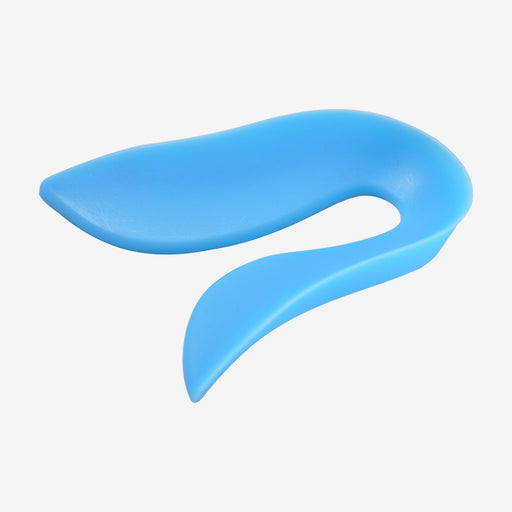
Raising the heel slightly may reduce the strain or compression experienced by the Achilles tendon during walking. Heel raises or slightly raised footwear are among measures that may improve symptoms.
Heel lifts are usually best considered one part of a broader rehabilitation programme rather than a standalone treatment.
Can insoles help Achilles tendinitis?
Insoles may improve comfort and support, particularly where foot mechanics are contributing to the amount of stress placed through the Achilles tendon.
They are not a cure, and not everybody with Achilles symptoms requires an orthotic insole.
Should I stretch my Achilles tendon?
Stretching can be useful for some people, but the correct approach depends on the location and stage of the condition.
In particular, some deep calf and heel-drop stretches may not be appropriate for insertional Achilles tendinopathy, where the tendon is painful at its attachment to the heel.
If you are unsure, follow an exercise programme provided by a physiotherapist or other qualified healthcare professional.
Should I rest Achilles tendinitis completely?
Usually not.
Reducing or temporarily changing activities that repeatedly aggravate the tendon can be useful, but prolonged complete rest may reduce tendon strength. Lower-impact activities such as cycling or swimming may allow you to remain active while reducing stress on the Achilles.
How long does Achilles tendinitis take to recover?
Recovery varies between individuals and can take several months. Tendons generally respond gradually to progressive rehabilitation rather than quick fixes.
Some NHS guidance suggests that 6 to 9 months of rehabilitation may be needed before returning fully to activity without pain.
When should I seek professional advice?
Seek assessment if the pain is severe, continues to worsen, repeatedly returns or significantly interferes with walking and everyday activity.
A sudden sharp pain, snapping or popping sensation, significant swelling or difficulty walking or standing on your toes requires more urgent assessment because these symptoms can indicate an Achilles tendon rupture rather than tendinitis.