Skip to content

Heel Cups

Heel cups and heel cushion pads provide targeted cushioning beneath the heel, helping absorb impact and reduce pressure when walking or standing. They are commonly used for discomfort associated with plantar fasciitis, heel spurs and tired or sensitive heels. 

  • SoleRelief Flat Feet Half Insoles

    Original price £12.99 - Original price £12.99
    Original price
    £12.99
    £12.99 - £12.99
    Current price £12.99

    Provides optimal support for the heel and arch to relieve foot aches and pain Ergonomic arch support (2.5cm high) Deep heel cup ensures stability ...

    View full details
  • ComfortHeel Gel Heel Cushion Pads

    Original price £11.99 - Original price £11.99
    Original price
    £11.99
    £11.99 - £11.99
    Current price £11.99

    Naturally relieves pain at the heel of your foot, resulting in more comfortable and stress free walks Designed for sufferers of plantar fasciitis ...

    View full details
  • ComfortHeel Gel Heel Lifts

    Original price £17.99 - Original price £17.99
    Original price
    £17.99
    £17.99 - £17.99
    Current price £17.99

    Inserts into any type of footwear to treat leg length discrepancy Increase your height comfortably so you end up looking taller and feeling more c...

    View full details
  • ComfortHeel Gel Heel Lift Inserts

    Original price £12.99 - Original price £12.99
    Original price
    £12.99
    £12.99 - £12.99
    Current price £12.99

    An immediate and effective solution to treat leg length discrepancy Suitable to be inserted into any type of shoes and footwear Look taller and fe...

    View full details
  • ComfortHeel Height Increase Inserts

    Original price £9.99 - Original price £9.99
    Original price
    £9.99
    £9.99 - £9.99
    Current price £9.99

    Increase your height comfortably to look taller and boost confidence Effective at absorbing shocks and relieving pressure on the heel due to its E...

    View full details
  • ComfortHeel Xtra Support Height Increase Inserts

    Original price £13.99 - Original price £13.99
    Original price
    £13.99
    £13.99 - £13.99
    Current price £13.99

    Simple solution for boosting height and self-confidence while also providing maximum support for your feet Honeycomb silicone gel design and shock...

    View full details
  • ComfortHeel Honeycomb Gel Heel Cups

    Original price £8.99 - Original price £8.99
    Original price
    £8.99
    £8.99 - £8.99
    Current price £8.99

    Relieves heel aches and pain by absorbing shocks and impact Gel honeycomb design distributes pressure and minimises heel stress as a result Contou...

    View full details
  • Dual Density Gel Heel Cups

    Original price £19.99 - Original price £19.99
    Original price
    £19.99
    £19.99 - £19.99
    Current price £19.99

    Relieves heel pain when walking or standing for long periods of time Designed for sufferers of plantar fasciitis, heel pain, tired and aching feet...

    View full details
  • ComfortHeel U-Shaped Heel Cups

    Original price £10.99 - Original price £10.99
    Original price
    £10.99
    £10.99 - £10.99
    Current price £10.99

    Relieves heel pain caused by plantar fasciitis, a heel spur and cracked heels U-shaped design elevates the heel so that contact with the footwear ...

    View full details
  • ComfortHeel Deep Gel Heel Cups

    Original price £10.99 - Original price £10.99
    Original price
    £10.99
    £10.99 - £10.99
    Current price £10.99

    Alleviates pressure and absorbs shocks from the heel region of the foot Treats heel pain as a result of plantar fasciitis, a heel spur, Achilles h...

    View full details
  • ComfortHeel Gel Padded Heel Brace

    Original price £9.99 - Original price £9.99
    Original price
    £9.99
    £9.99 - £9.99
    Current price £9.99

    Gel heel cup distributes pressure and absorbs impact every time your heel strikes the ground Alleviates pain caused by common conditions such as p...

    View full details
  • ComfortHeel Pain Relief Gel Inserts

    Original price £14.99 - Original price £14.99
    Original price
    £14.99
    £14.99 - £14.99
    Current price £14.99

    Relieves heel pain caused by plantar fasciitis, heel spurs, heel fractures and other heel related conditions Keeps heel elevated resulting in mini...

    View full details
  • Scholl Heel Pain Relief Insoles

    Original price £24.99 - Original price £24.99
    Original price
    £24.99
    £24.99 - £24.99
    Current price £24.99

    Designed to relieve heel and ankle pain that can result from being on your feet all day Dual layer cushioning gel helps to absorb shocks and redis...

    View full details
  • Powerstep Powerkids Paediatric Orthotic Support Insoles

    Original price £34.99 - Original price £34.99
    Original price
    £34.99
    £34.99 - £34.99
    Current price £34.99

    Supports pediatric foot growth and reduces the risk of developing foot conditions such as flat feet and overpronation Integrated contoured arch su...

    View full details

Heel Cups Buying Guide

Heel cups sit beneath and around the heel to provide targeted cushioning without replacing the entire shoe insole. They can help soften the impact of each step and reduce concentrated pressure beneath sensitive areas.

The right design depends on where you experience discomfort, how much cushioning you prefer and the amount of space available inside your footwear. This guide explains the main options and how to choose between them.

Which Heel Cup Is Right for Me?

Heel cups vary in depth, firmness, material and shape. Some provide soft everyday cushioning, while others offer deeper support or create space around a particularly sensitive area.

Gel, Silicone and Shock-Absorbing Heel Cups

Gel and silicone heel cups provide soft, flexible cushioning beneath the heel to help absorb impact and reduce pressure during walking and standing.

Designs may include honeycomb structures, shock-absorbing cells or dual-density materials that combine softer cushioning beneath sensitive areas with firmer support around the heel.

Most are washable and reusable. Some have a deeper, contoured shape that surrounds the heel, while thinner heel pads provide discreet cushioning inside shoes with less space.

Best suited to:

  • Everyday heel cushioning
  • Tired, aching or sensitive heels
  • Absorbing impact on hard surfaces
  • Walking or standing for long periods
  • Work, exercise and active lifestyles

Deep Heel Cups

Deep heel cups extend further around the sides and back of the heel. Their contoured shape helps hold the heel more securely and can provide a greater feeling of stability than a flat cushion pad.

Some deeper designs also support part of the rear arch, although they remain more compact than a full-length insole.

Best suited to:

  • Greater support around the heel
  • People who prefer a more secure fit
  • Reducing movement inside the shoe
  • Trainers, work shoes and other supportive footwear

U-Shaped Heel Cups

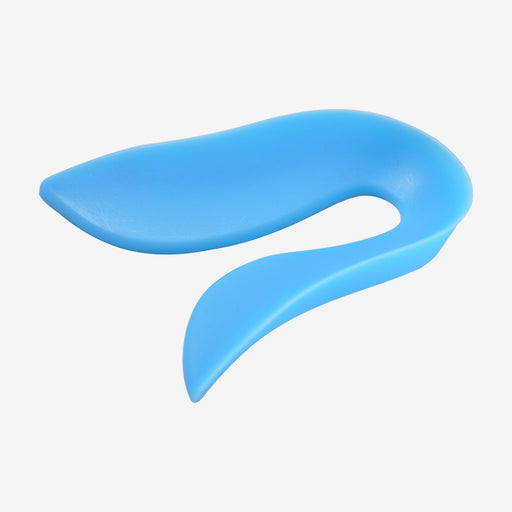
U-shaped heel cups cushion the area around the edge of the heel while leaving space beneath the centre. This design may suit people who experience localised tenderness and want to reduce direct pressure on a sensitive point.

Correct positioning is important so that the open or recessed area sits beneath the part of the heel you wish to protect.

Best suited to:

  • Localised heel tenderness
  • Reducing direct contact beneath the centre of the heel
  • Heel spurs or bruised-feeling heels
  • People who prefer targeted pressure relief

Heel Sleeves and Braces

Heel sleeves and braces wrap around the foot or ankle and contain an integrated gel or padded section beneath the heel. Because the cushioning is secured to the foot, it stays in position when changing shoes or walking without footwear. They require more room than a loose heel cup and may feel tight inside narrow shoes.

Best suited to:

  • Keeping the heel pad securely positioned
  • Moving between different pairs of shoes
  • Wearing around the home
  • People who prefer support attached to the foot

Half Insoles with Heel Cups

Half-length insoles support both the heel and arch while leaving the forefoot uncovered. They offer broader support than a stand-alone heel cup but occupy less space than a full-length insole.

They may be more suitable if your heel discomfort is accompanied by arch pain, flat feet or overpronation.

Best suited to:

  • Combined heel and arch support
  • People who need greater stability
  • Shoes without room for a full-length insole
  • Discomfort linked to foot alignment or arch support

Benefits of Heel Cups

Heel cups provide targeted cushioning beneath the heel without replacing the shoe’s existing insole. Depending on the design, they may offer the following benefits:

  • Cushion the Heel – Gel, silicone and foam materials create a softer surface beneath the heel, which may improve comfort during walking, standing and everyday activities.
  • Absorb Impact – The heel absorbs considerable force each time it contacts the ground. A cushioned heel cup can help soften this impact, particularly when walking on hard surfaces or spending long periods on your feet.
  • Reduce Concentrated Pressure – Contoured, recessed and dual-density designs can help distribute pressure around the heel rather than allowing it to remain focused beneath one sensitive point.
  • Fit Inside a Range of Footwear – Because heel cups cover only the rear of the foot, they usually occupy less space than full-length insoles. This can make them suitable for trainers, work shoes and some everyday footwear.

How to Choose the Right Heel Cup

The most suitable heel cup should provide noticeable cushioning without making your footwear tight or changing the way your foot sits uncomfortably.

  • Consider Where You Feel Discomfort – A standard gel cup may suit general heel tenderness, while a U-shaped or recessed design may be more appropriate for discomfort concentrated beneath one particular area. If the pain extends into the arch, a half or full-length supportive insole may be more suitable than a heel cup alone.
  • Choose the Right Depth – A shallow heel pad adds cushioning while taking up minimal space. A deeper cup surrounds more of the heel and may provide greater stability, but it also requires footwear with enough depth.
  • Consider the Firmness – Soft gel provides gentle cushioning, while firmer silicone and dual-density materials offer more noticeable support. The cup should feel comfortable rather than hard or intrusive beneath the heel.
  • Check Your Footwear – Heel cups work best in enclosed, secure footwear. Backless shoes may allow the support to move, while shallow or tightly fitting shoes may become uncomfortable once additional cushioning is inserted.
  • Check the Height of Both Heels – A heel cup slightly raises the foot. It is usually preferable to wear matching supports in both shoes to maintain a balanced feel, unless a healthcare professional has advised otherwise.
  • Heel Cup or Heel Lift? – A heel cup is primarily designed to cushion and support the heel. A heel lift deliberately raises it and may be used for purposes such as leg-length differences, Achilles tendon discomfort or increasing height. Choose according to the product’s intended purpose rather than assuming the two terms mean the same thing.

Heel Cups or Full-Length Insoles?

Heel cups provide focused cushioning beneath the heel and take up relatively little room inside the shoe. They may be suitable when discomfort is limited mainly to the rear of the foot.

Full-length insoles support a larger area, including the heel, arch and forefoot. They may be more appropriate if you also need arch support, improved stability or cushioning across the whole sole.

Explore our heel and arch support insoles for broader support, or browse our wider shoe inserts collection for other targeted options.

How to Use Heel Cups

Follow these simple tips to position, wear and care for your heel cups correctly for the best possible comfort and support.

  • Position Them Correctly – Place the rounded end against the back of the shoe, with the heel centred inside the cup. If using a U-shaped or recessed design, ensure the pressure-relieving area sits beneath the sensitive part of the heel.
  • Wear Them in Both Shoes – Unless instructed otherwise, use a matching heel cup in each shoe. Wearing one support alone can create a small difference in height and may make walking feel uneven.
  • Start Gradually – Begin by wearing new heel cups for short periods and gradually increase the duration as your feet become accustomed to them.
  • Choose Secure Footwear – Wear shoes that hold the heel securely and provide enough depth for the cup. Footwear should not become tight across the toes or cause the heel to slip out at the back.
  • Keep Them Clean – Wash reusable gel and silicone heel cups according to the product instructions. Allow them to dry fully before placing them back inside your shoes.
  • Listen to Your Feet – Heel cups may feel unfamiliar initially, but they should not cause sharp pain, numbness, skin irritation or worsening discomfort. Discontinue use if these symptoms occur or persist and seek advice from a podiatrist or qualified healthcare professional.

Frequently Asked Questions

What are heel cups used for?

Heel cups provide cushioning and targeted support beneath the heel. They are commonly used to improve comfort when walking or standing and may form part of the self-care approach for conditions such as plantar fasciitis.

Can heel cups help plantar fasciitis?

Heel cups may help cushion the painful area and soften impact beneath the heel. However, plantar fasciitis is often managed using several measures, including supportive footwear, stretching, activity adjustments and suitable insoles or heel pads.

Can heel cups help heel spurs?

Heel cups may improve comfort by cushioning the heel and reducing pressure around a sensitive area. They do not remove the bony growth itself, and persistent or severe symptoms should be assessed by a healthcare professional.

What is the difference between a heel cup and a heel pad?

The terms are sometimes used interchangeably. A heel pad is usually flatter and focuses mainly on cushioning, while a heel cup has a more contoured shape that surrounds part of the heel and may provide additional stability.

Are foam or gel/silicone heel cups better?

Foam heel cups provide lightweight, softer cushioning and may suit people who prefer a less noticeable feel inside their shoes. Gel and silicone heel cups are generally more durable, washable and supportive, with better shock absorption for regular use. The best choice depends on your preferred firmness, footwear and how often you intend to wear them.

Can I wear heel cups all day?

Many heel cups are suitable for extended use once your feet have adjusted. Start with shorter periods and increase the wearing time gradually, provided they remain comfortable.

Can heel cups be worn in any shoes?

They work best in enclosed shoes with enough depth to accommodate the additional material. Narrow, shallow or backless footwear may not hold them securely.

Should I wear heel cups in both shoes?

In most cases, using matching cups in both shoes provides a more balanced feel. Seek professional advice if you have been told to use different support on one side because of a leg-length difference or another condition.

How long do heel cups last?

Their lifespan depends on the material, frequency of wear and pressure placed on them. Replace them when the cushioning becomes flattened, damaged, misshapen or no longer remains securely positioned.

When should heel pain be assessed?

Seek medical advice if heel pain is severe, worsening, repeatedly returning or has not improved after around two weeks of self-care. You should also obtain advice if you experience tingling, loss of sensation or have diabetes and develop foot pain.

Learn More About Heel Pain

Learn more about the possible causes of heel discomfort and the different ways it may be managed in our related guides.

Recommended reading: