
What Happens When You Wear Toe Separators for 2 Years?
What if the shoes you wear every day are slowly weakening your body from the ground up?
That’s the provocative question at the heart of the barefoot shoe movement – and Ali Spagnola from Fitness Outrageous decided to test the idea in the most extreme way possible.
For more than two years, she wore toe spacers regularly, transitioned into barefoot-style shoes, trained her foot muscles intentionally, and documented the transformation month by month.
What started as curiosity evolved into a complete lifestyle change. According to Ali, the experiment led to stronger feet, better balance, improved mobility, and even increases in gym performance.
We break down the biggest ideas from her video and explain the philosophy behind barefoot footwear, and explores why so many people are rethinking what they put on their feet.
Your Feet Are Really Messed Up
“I care about you. You have a problem. Your feet are really messed up.”
Ali argues that most people have spent their entire lives in shoes that restrict natural foot function.
Human feet evolved to:
- Flex and bend naturally
- Spread the toes apart for balance
- Absorb force during walking and running
- Stabilise the body from the ground up
According to Ali, modern shoes interrupt all of those functions.
Most conventional footwear is designed with:
- Thick cushioned soles
- Elevated heels
- Stiff structures
- Narrow toe boxes
Instead of the foot actively supporting the body, the shoe takes over the work. Over time, the muscles of the feet become weaker because they are no longer being fully used.
She compares this to strength loss anywhere else in the body – “Use it or lose it.”
Her argument is that weak feet don’t just affect the feet themselves – they can influence the entire kinetic chain. If your foundation is unstable, the effects may travel upward into the ankles, knees, hips and lower back.
This establishes the central belief of the barefoot movement – healthy movement begins with healthy feet.
The Problem With “Shoe-Shaped Feet”
One of the strongest visual ideas in the transcript is the concept of “shoe-shaped feet.”
“Feet are not shaped like this. They’re wide and they don’t come to a point.”
Ali explains that many people assume narrow feet are natural simply because most shoes are shaped that way. But when you compare feet to the outline of traditional shoes, there’s a mismatch.
Natural feet are generally:
- Wider at the toes
- More spread out
- More flexible
Traditional fashion shoes, trainers and dress shoes often taper aggressively toward the front. Over years of daily use, Ali argues that feet slowly adapt to the shape of the shoe.
This can potentially contribute to:
- Toe crowding
- Bunions
- Reduced toe mobility
- Weak intrinsic foot muscles
- Balance issues
She refers to this as having “shoe-shaped feet” – feet that have been moulded by years of compression.
This idea is central to why barefoot enthusiasts prefer wide toe boxes. They believe shoes should match the natural anatomy of the foot instead of reshaping it.

The Barefoot Shoe Philosophy
Ali’s solution is simple – feet-shaped shoes.
Barefoot-style shoes are designed to interfere with natural movement as little as possible. Unlike heavily cushioned footwear, they aim to recreate the feeling of walking barefoot while still protecting the foot from rough surfaces.
Typical barefoot shoe features include:
- Wide toe boxes
- Thin soles
- Flexible materials
- Minimal arch support
- Zero heel drop
The thin sole allows the wearer to feel the ground more directly, while the wide shape gives the toes room to spread naturally.
According to Ali, this promotes:
- Better balance
- Improved foot strength
- More natural walking mechanics
- Greater stability during lifting and movement
She also highlights a major claim within the barefoot community that heel striking during walking or running may increase impact forces throughout the body.
“Instead of slamming your heel and rattling everything horribly up every bend of your body to your brain.”
While the science around barefoot running is still debated, many advocates believe reducing excessive cushioning encourages more natural gait patterns.
Why Are Pointy Shoes Fashionable?
One of the most interesting parts of the video is the historical explanation for pointed shoes.
“Having horses meant you were rich.”
Ali explains that in earlier centuries, pointed shoes worked well with stirrups for horseback riding. Since horse ownership was associated with wealth and status, pointed shoes gradually became fashionable symbols of luxury.
Over time, the aesthetic remained culturally desirable – even if it wasn’t ideal for foot health.
“We all are destroying our bodies from the ground up because we’re all outdated trying to convince each other we’re rich.”
She suggests that many modern fashion standards are inherited traditions rather than designs optimised for human anatomy.
Whether or not the historical explanation is fully accurate, it reinforces the broader theme – modern footwear often prioritises appearance over function.
What Are Toe Spacers?
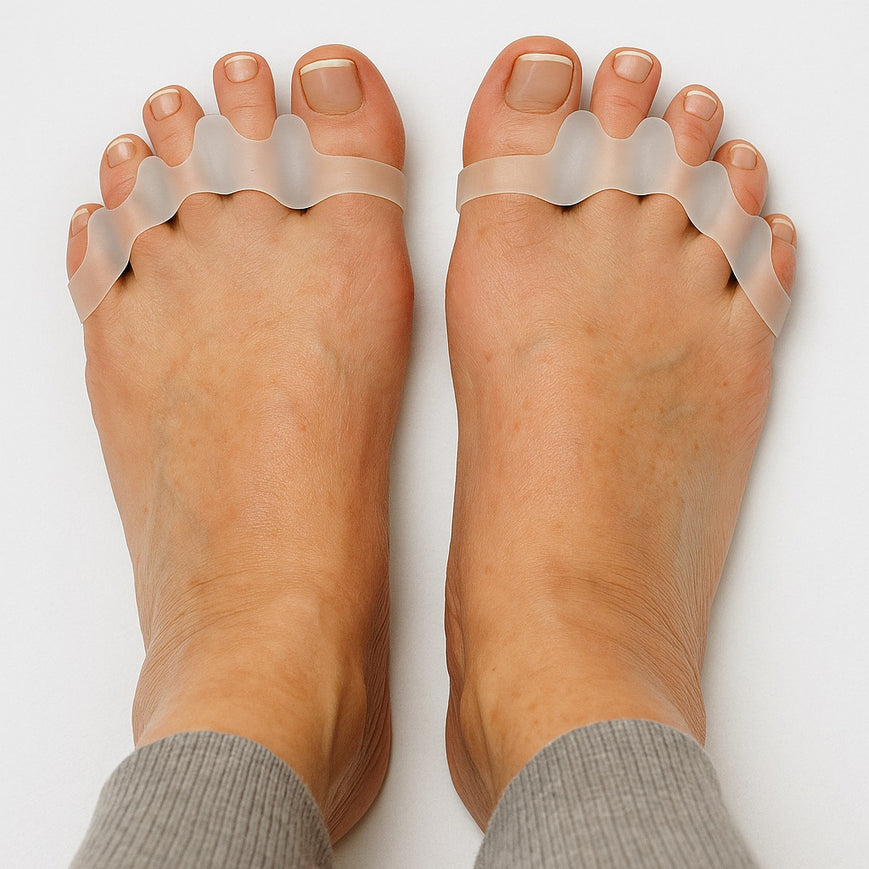
Toe spacers (aka. toe separators) are silicone or foam separators worn between the toes.
Their purpose is to gently encourage the toes back into a wider, more natural alignment after years of compression inside narrow footwear.
Ali describes them as:
“A way to get your shoe-shaped fake rich people feet back to healthy wide cave people feet.”
Toe spacers are popular in the barefoot community because they:
- Encourage toe splay
- Increase awareness of foot positioning
- Stretch compressed tissues
- Promote mobility
Ali initially wore them for short periods during workouts but eventually built up to wearing them for most of the day.
At first, the experience was uncomfortable:
“The first time you use toe spacers they may even hurt.”
According to Ali, that discomfort came from weak and restricted foot muscles being challenged in unfamiliar ways. Over time, the spacers became comfortable enough for all-day use.
Our Most Popular Toe Spacers
DuraFlex Gel Toe Separators
View Product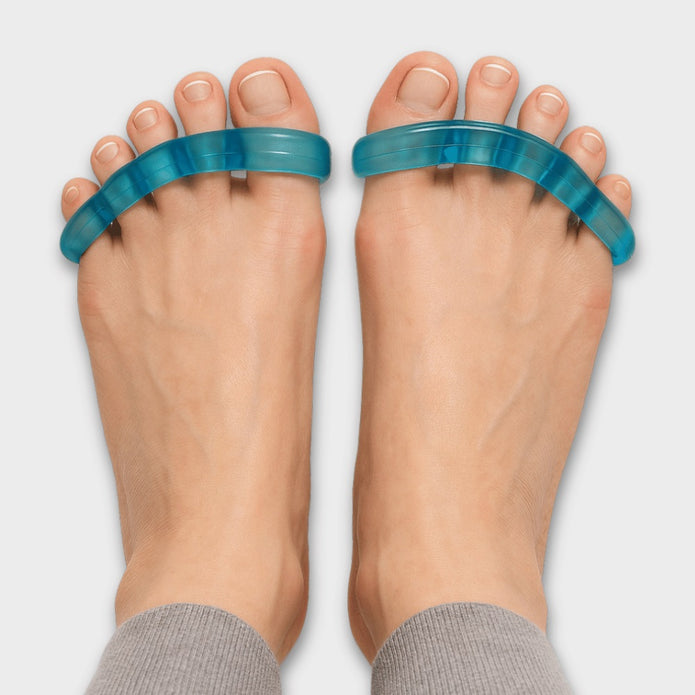
Home Gel Toe Separators
View ProductWhy You Should Transition Slowly
One of the most important messages is that people should avoid transitioning too aggressively.
Ali repeatedly warns against suddenly:
- Throwing away all traditional shoes
- Walking barefoot full-time
- Overloading weak foot muscles
“You have to ease into both toe spacers and barefoot shoes.”
This gradual transition matters because many people have spent decades with underdeveloped foot strength. Suddenly demanding more work from the feet can lead to soreness or injury.
She recommends:
- Wearing barefoot shoes for short periods
- Gradually increasing time
- Building strength progressively
- Letting the body adapt slowly
This mirrors how athletes approach training in general. You wouldn’t attempt a marathon without preparation, and Ali argues the same principle applies to foot mechanics.
Building Habits Through Anchoring
One surprisingly practical section of the video focuses on behaviour change. Ali explains how they turned toe spacers into a consistent habit using a strategy called “anchoring.”
“Every time I put on my socks, that was my cue to go get my toe spacers.”
Anchoring works by attaching a new habit to an existing routine. Since putting on socks already happened every morning, adding toe spacers became easier and more automatic.
This approach helped her maintain consistency long enough for the behaviour to become second nature – “Suddenly it’s two years later.”
The section highlights an important truth about long-term transformation – small daily actions matter more than occasional bursts of motivation.
Toe Yoga and Rebuilding Foot Control
As the experiment continued, Ali became fascinated with foot mobility and coordination. One major milestone was learning to move the big toe independently from the others.
“It took me a full 10 weeks to make that connection.”
At first, she struggled to activate muscles that had effectively become dormant from years of restricted movement.
She describes several “toe yoga” exercises, including:
- Spreading the toes apart
- Lifting only the big toe
- Keeping the big toe down while lifting the smaller toes
- Controlling movement without rotating the ankles
These drills revealed how disconnected many people are from their feet.
Ali frames this as a neuromuscular issue as much as a strength issue – the brain itself has to relearn how to communicate with the foot muscles.
“Your feet aren’t fully connected to the ground.”
Over time, practising these movements improved coordination, awareness and stability.
Foot Strength and Athletic Performance
One of Ali’s biggest claims is that stronger feet improved gym performance. Over roughly two and a half years, she reported increases in:
- Cleans: 105 lb → 125 lb
- Squats: 150 lb → 180 lb
- Deadlifts: 215 lb → 240 lb
She’s careful not to attribute all progress solely to toe spacers or barefoot shoes and acknowledges consistent training, better recovery, bulking and time under the bar all played major roles.
Still, she believes stronger feet improved:
- Stability
- Ground force production
- Balance during lifting
This idea aligns with the barefoot philosophy that the feet serve as the body’s foundation. If the foundation becomes stronger and more stable, movement quality throughout the chain may improve as well.
The 28-Month Transformation
The emotional climax of the video comes when Ali reflects on documenting her feet over 28 months.
Each month, she sat in the same place and took progress photos. But eventually she had to stop – not because the experiment ended, but because they were moving homes.
The transformation photos shows:
- Wider toe spacing
- More natural foot shape
- Better alignment
- Greater toe separation
For Ali, the changes became permanent enough that they no longer viewed traditional footwear the same way.
“I’m still going to be as barefoot as possible.”
The experiment may have started as curiosity, but by the end it had become a complete shift in how she approached movement, footwear and physical health.
Use It or Lose It
At its core, the video is about reconnecting with a part of the body most people rarely think about.
Ali argues that modern life has disconnected people from natural movement patterns and that reclaiming foot strength can have effects far beyond the feet themselves.
Whether or not every claim is scientifically proven, the broader takeaway is compelling:
- Feet are meant to move
- Strength matters at every level of the body
- Small daily habits create long-term change
- Modern convenience sometimes comes with hidden tradeoffs
And perhaps the most memorable lesson from the entire video is this – “Use it or lose it.”


Leave a comment