
Foot Physiotherapist Reveals Bunion Solution in 3 Steps
Bunions are one of the most common foot problems affecting adults, especially those who spend years in narrow shoes, on hard surfaces, or with poor foot mechanics.
While many people assume bunions inevitably worsen and eventually require surgery, physiotherapist Andrew from Freestyle Feet presents a different perspective in this video.
His approach focuses on restoring mobility, improving alignment and strengthening the foot so it can function more naturally again. Rather than treating the bunion as simply a “bone sticking out,” he explains how the entire foot structure contributes to the issue.
The process is built around three key stages:
- Unlocking tight tissues
- Realigning the toes
- Strengthening the foot muscles
In this article, we dive into how these strategies aim to reduce pain, improve movement and help the foot maintain healthier positioning over time.
Understanding What a Bunion Really Is
Many people think a bunion is just a bump on the side of the foot. However, Andrew explains that a bunion is actually a progressive structural change involving joint alignment, muscle imbalance and tissue stiffness.
Andrew points out that the visible deviation of the big toe develops slowly over time:
“This has been slowly building up over time.”
As the big toe shifts inward toward the smaller toes, the alignment of the forefoot changes. At the same time, deeper structures in the foot become restricted, particularly around the metatarsals and soft tissues underneath the foot.
Importantly, Andrew emphasises that improvement is possible:
“We can correct this angulation and we can straighten these toes up – so all’s not lost.”
Rather than seeing bunions as irreversible, the approach focuses on restoring better mechanics and reducing the forces contributing to the deformity.
Step 1: Unlock Tight Joints and Muscles
The first phase of treatment is all about restoring movement. Over time, stiff joints and tight muscles limit the foot’s ability to function correctly, so before strengthening can begin, the tissues need to be loosened.
Andrew refers to this stage as “unlocking.”
“When things have been like this for a while, we need to unlock things.”
Why Mobility Matters
When the foot becomes stiff, pressure distribution changes during walking and standing. Certain muscles stop activating properly while others become overworked and tight.
This can create:
- Reduced toe mobility
- Increased joint compression
- Poor balance and gait mechanics
- More stress on the bunion joint
By improving mobility first, the foot becomes more receptive to alignment and strengthening work later on.
Using a Massage Ball Under the Foot
One of the simplest tools Andrew recommends is a small massage ball rolled underneath the foot.
The exercise can be performed sitting down, standing up, barefoot and for one to two minutes at a time.
“Massaging under there one to two minutes worth of that is a great place to start.”
This rolling motion helps:
- Release tight fascia
- Improve circulation
- Mobilise the small joints of the foot
- Relax overworked muscles
Andrew also notes that muscles along the inside of the foot are often particularly tight and weak in people with bunions.
Best Massage Balls for Exercise
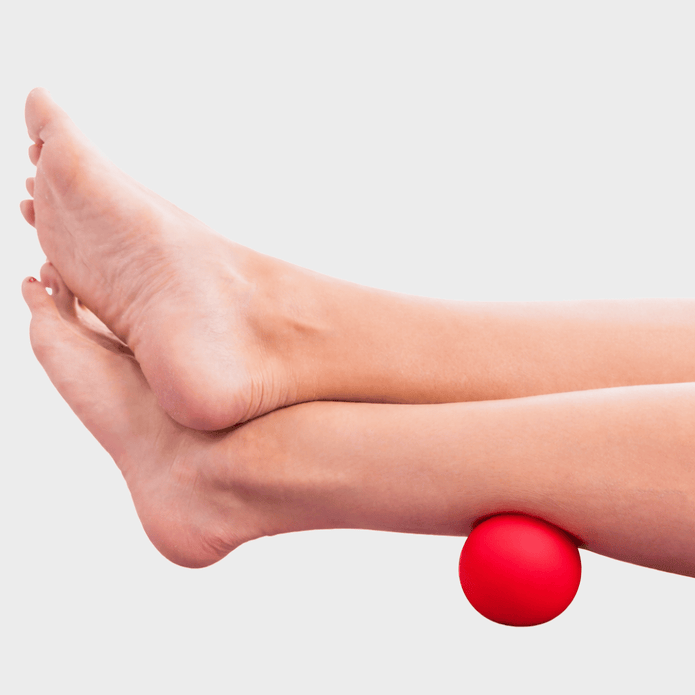
FootRevive Lacrosse Ball Massager
View Product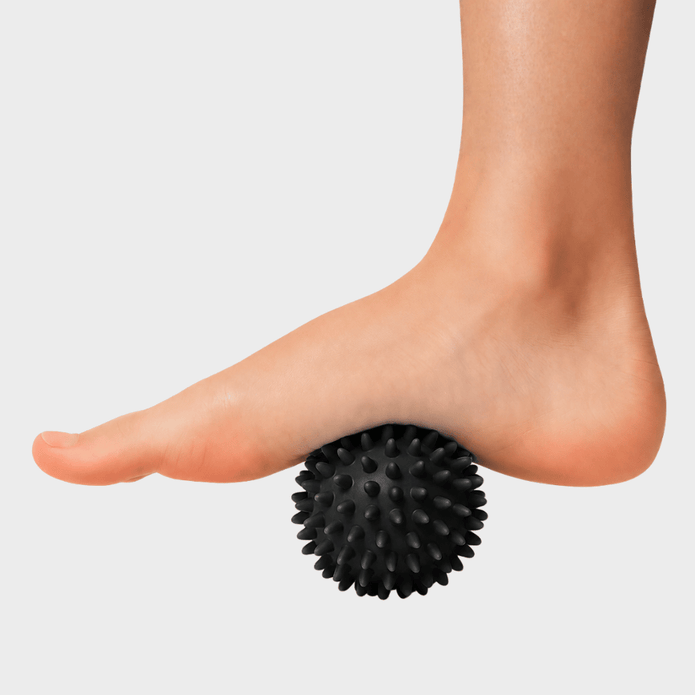
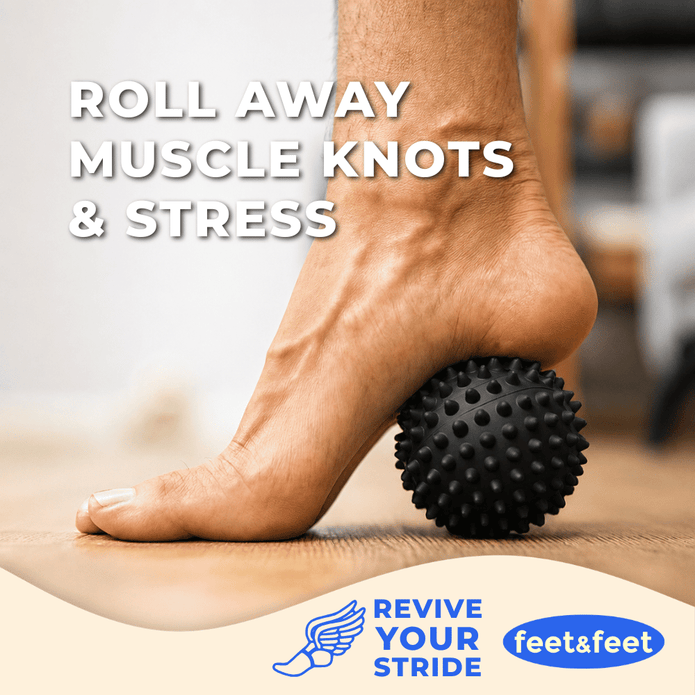
FootRevive Spiky Massage Ball
View ProductMobilising Between the Metatarsals
The video then introduces a specialised foot mobiliser tool designed to work between the metatarsal bones.
Andrew explains that although the bunion is visible near the big toe, many hidden restrictions occur further back in the foot:
“What’s hidden is some issues up in here where the bones have moved in a little closer.”
By working between these narrow spaces, the goal is to:
- Reduce stiffness
- Improve spacing between the bones
- Release compressed tissues
- Restore natural foot mechanics
Some tenderness is expected during this process.
“Some of these spots are quite painful and that’s normal.”
This reassurance is important because many people avoid mobility work due to discomfort, even though those tight tissues often need targeted release.
Step 2: Realign the Toes
Once the foot is more mobile, the next goal is improving toe alignment. Andrew emphasises that alignment work needs to be gentle and consistent rather than aggressive.
Manual Toe Stretching
The simplest correction method involves manually guiding the big toe back into a straighter position.
“I’m not using a lot of force, but I’m just stretching him back across.”
The stretch is typically held for:
- 30-60 seconds
- Repeated regularly
- Performed without pain
This technique helps:
- Reduce soft tissue tightness
- Encourage improved positioning
- Increase awareness of proper alignment
Although temporary at first, repeated stretching gradually trains the tissues to tolerate a better position.
Night Splints for Prolonged Alignment
Andrew also mentions overnight splints, which hold the toe in a corrected position while sleeping.
The advantage of splints is duration. Keeping the toe aligned for several hours may help:
- Reduce stiffness overnight
- Prevent worsening deviation
- Encourage gradual tissue adaptation
However, splints alone are not enough because the foot also needs active muscle engagement during movement.
Our Best Bunion Splints
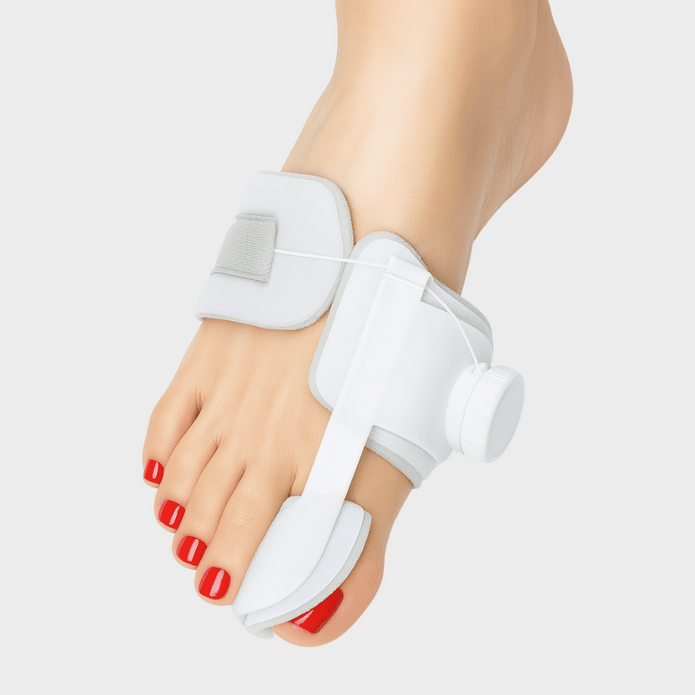
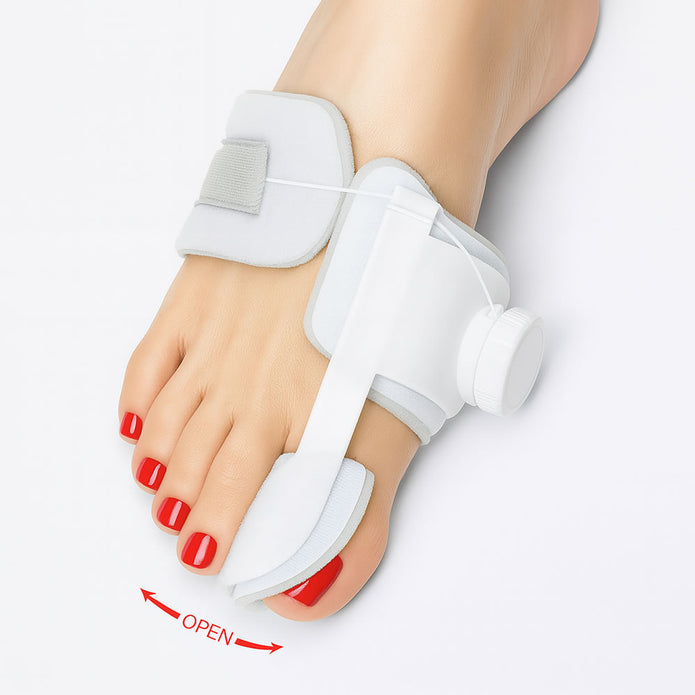
ActiveRestore Adjustable Bunion Corrector Splint
View Product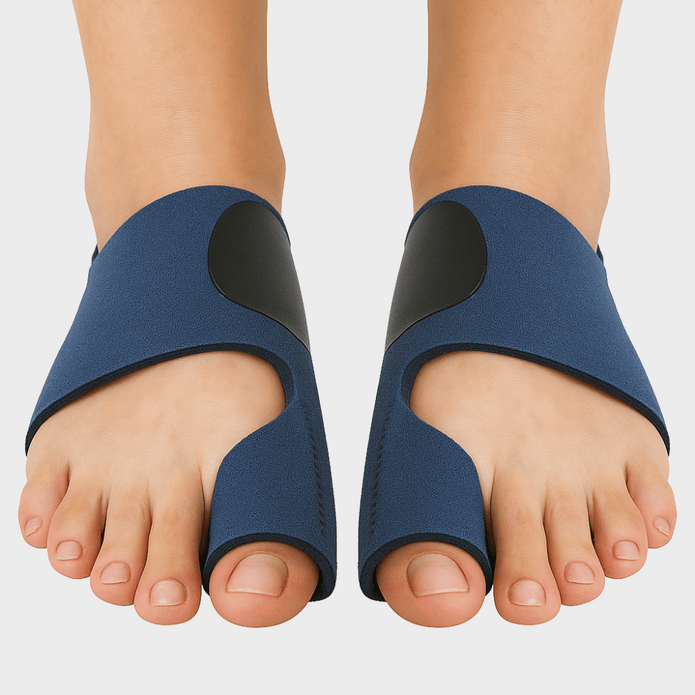
ActiveRestore Bunion Corrector Splints
View ProductSilicone Toe Spreaders and Functional Alignment
A major focus of the video is silicone toe spreaders (aka. toe spacers or toe separators). Unlike simple bunion spacers that only separate the big toe, these spreaders position all the toes apart.
“These separate all the toes, which gets all the muscles in the feet working.”
Andrew explains that this matters because the muscles of the foot function as a connected system.
Proper toe spacing allows:
- Better balance
- More muscle activation
- Improved weight distribution
- Healthier walking mechanics
He also highlights a key point:
“If we hold the toes in good alignment whilst exercising and moving them around…”
Movement while aligned is critical because the body learns through repetition and function – not just passive stretching.
Our Best Toe Separators
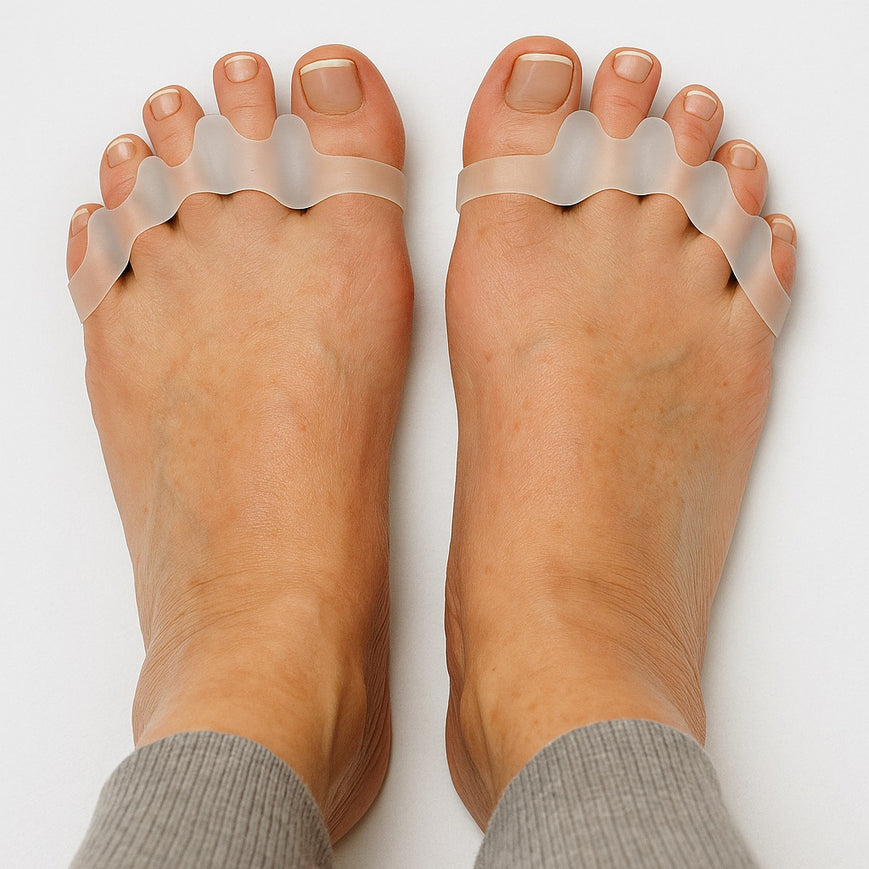

DuraFlex Gel Toe Separators
View Product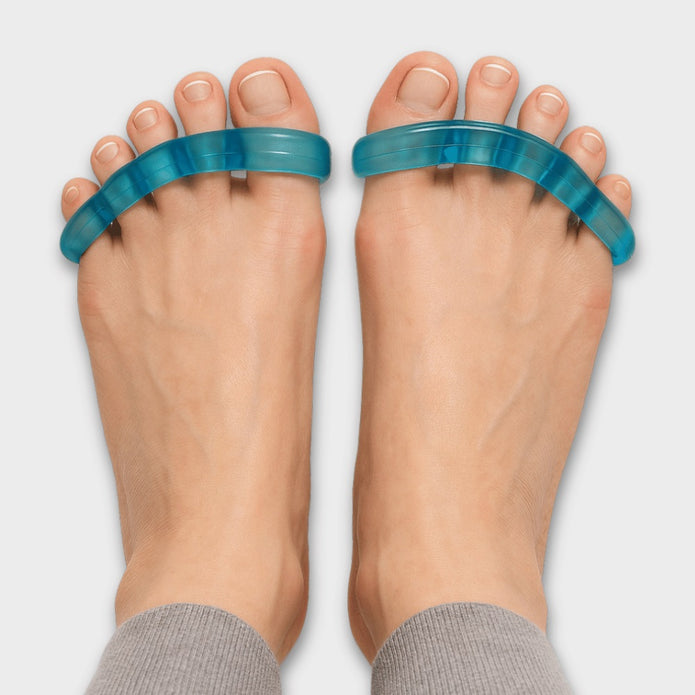
Home Gel Toe Separators
View ProductStep 3: Strengthen the Foot Muscles
The final stage focuses on making the changes permanent. Without strengthening, the toes often drift back into their previous position once supports are removed.
“We need to make it much, much stronger than just a bare minimum level.”
The Importance of the Abductor Hallucis Muscle
Andrew specifically discusses the abductor hallucis muscle, which runs along the inside of the foot and helps stabilise the big toe.
In many people with bunions, this muscle becomes weak or inactive.
When functioning correctly, it helps:
- Pull the toe into better alignment
- Stabilise the arch
- Improve foot control during walking
Strengthening this muscle is essential for long-term improvement.
The Toe Press Exercise
The strengthening exercise shown in the video is simple but highly targeted.
The process involves:
- Moving the big toe into better alignment
- Pressing the toe gently into the ground
- Activating the muscles underneath the arch
“Those are the muscles that are going to keep that alignment.”
Andrew notes that some people initially struggle to move the toe independently. In those cases, using the fingers to guide the movement is perfectly acceptable.
This exercise helps retrain:
- Neuromuscular control
- Foot stability
- Muscle activation patterns
Over time, the muscles become better at maintaining alignment naturally.
Why Consistency Is Essential
One of the strongest themes throughout the video is that improvement takes repetition and consistency.
Andrew repeatedly emphasises gradual progress:
- A few minutes daily
- Wearing toe spreaders regularly
- Repeating strengthening exercises
- Building tolerance slowly
The body adapts through repeated movement and loading patterns. Small daily habits are more effective than occasional aggressive treatment sessions.
Can Bunions Be Fully Corrected?
The message remains realistic while still optimistic. Andrew acknowledges that complete bunion correction may not always occur.
However, he also explains that many people achieve surprisingly positive improvements in:
- Toe position
- Foot comfort
- Strength
- Walking mechanics
- Overall function
“We’ve had some amazingly good results in a really short space of time.”
This balanced perspective makes the advice practical and encouraging without overpromising.
Unlock, Align, Strengthen
The central message of the video is simple but powerful:
- Unlock tight tissues and stiff joints
- Align the toes into healthier positions
- Strengthen the muscles that maintain alignment
Together, these steps create a more functional, resilient foot. If you’re looking for natural ways to manage bunions before considering surgery, this approach offers a practical starting point grounded in mobility, movement and strength training rather than passive treatment alone.


Leave a comment