


Can You Get Toes Straightened on the NHS?

Many people who suffer from certain conditions that affect the toes (such as hammer toes, bunions and overlapping toes) want to know whether the NHS offers procedures for toe straightening.
The short answer is yes; in certain circumstances you can have toes straightened on the NHS but only when it’s clinically necessary (e.g. to relieve pain, prevent complications or restore function) rather than for purely cosmetic reasons.
Here’s a more detailed explanation of how it works, when the NHS might approve it and what to expect:
Types of Toe Straightening Surgeries
“Straightening” toes can mean a few different procedures depending on what kind of deformity is involved.
Here’s what’s involved for certain conditions:
- Hammer toe, claw toe, mallet toe and curly toe (deformities of the smaller toes) – Surgery may involve releasing tight tendons, removing bone, fusing joints or repositioning joints to make the toe straighter.
- Bunion (hallux valgus) – When the big toe is angled toward the other toes, a “straightening” operation (osteotomy/joint realignment) might be performed.
- Corrective surgery for smaller toes in conjunction with bunion surgery – In some cases, smaller toes are addressed at the same time as correction of the big toe.
So by “straightening toes”, the NHS generally refers to surgeries to correct deformities that cause severe symptoms or functional problems.
Best Natural Toe Straighteners
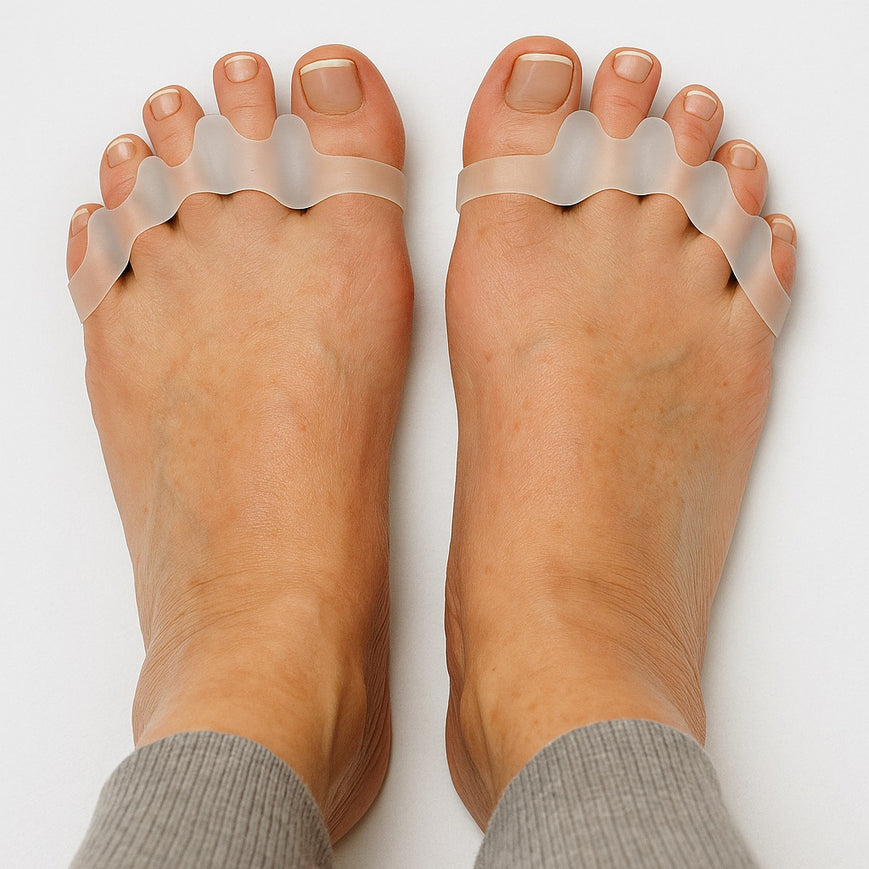

DuraFlex Gel Toe Separators
View Product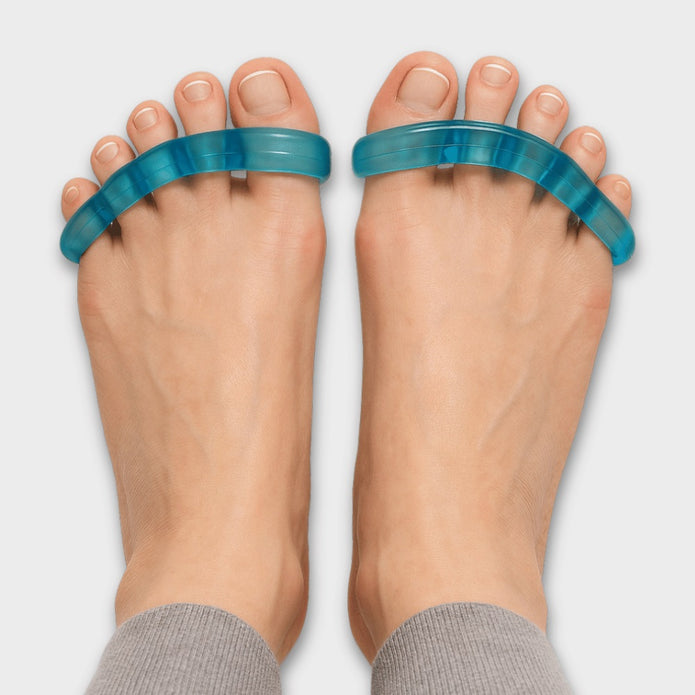
Home Gel Toe Separators
View ProductWhen the NHS will (or won’t) fund toe-straightening surgery
Because healthcare resources are finite, the NHS applies certain criteria and guidelines.
They typically require:
1. Clinical Need
The deformity usually must cause pain, difficulty wearing shoes, pressure sores, corns or functional impairment. If the toe is just crooked but not troublesome, the NHS is unlikely to approve surgery as this typically is attributed to it being cosmetic.
2. Failure of Conservative (Non-Surgical) Treatments
Before surgery is considered, patients are expected to try non-surgical options such as wider shoes, pain relief medication or orthotics (such as insoles, pads or splints) and podiatry care. If these fail to relieve symptoms, then surgery may be considered.
3. Meeting Local or Regional NHS Policy
Some NHS trusts or commissioners have specific policies or funding thresholds that restrict when toe surgery is funded (for example, only if there is moderate–severe pain, shoe fitting problems or functional limitation).
4. Medical Fitness and Safety
As with any surgery, you must be fit enough to undergo the procedure and manage the post-operative care (wound healing and mobility). If you have any serious uncontrolled health issues, then surgery may not be advised.
If you don’t meet those criteria (e.g. your toe is straightened only for appearance, with no pain or dysfunction), your request for surgery may be declined.
Step-by-Step: Toe Straightening on the NHS
If you think you might qualify for toe straightening surgery on the NHS, here is a short step-to-step guide:
- See your GP – Describe your symptoms (pain, difficulty wearing shoes, functional problems). Ask for a referral to a foot specialist, orthopaedic surgeon or podiatrist.
- Assessment and Imaging – A specialist will examine your toes, assess flexibility, take X-rays and determine whether non-surgical options have been tried or would help.
- Conservative Management – You’ll likely be advised to try wide/deep shoes, orthotics, padding, splints, physiotherapy and various other non-surgical methods of toe straightening first.
- Surgery Decision – If symptoms persist and you meet the clinical criteria, the specialist may decide to proceed with surgery. They will explain the risks, benefits and recovery timeline (e.g. after toe-straightening surgery of lesser toes, wires or pins may be used and removed after 4-6 weeks).
- Waiting List and Prioritisation – Even if approved, you’ll go on a waiting list, since such operations may be lower priority compared to more urgent cases.
The entire process from getting a referral to undergoing surgery can take at least several months and sometimes even up to one year.
In the mean time, you can take a look at our wide range of toe straightening products which may help you depending on your condition type and severity.


Leave a comment