
Can Bunions Be Prevented?

Whether bunions can be prevented or at least slowed down depends a lot on why you’re prone to them in the first place.
To assess your risk of developing a bunion, we need to go through a checklist to identify whether your risk is more genetic or more mechanical.
Genetic Risks
The following factors lean towards a genetic risk for bunions:
- One or both parents have bunions
- Siblings or grandparents have them too
- You notice your big toe angling inward before years of tight shoes or long standing jobs
- Big toe drifts inward early, often on both feet, even with decent shoes
The more points that you answer yes to, the stronger the genetic component is. Genetic bunions usually come from:
- Bone structure of the big toe joint
- Ligament laxity (i.e. “looser” joints)
- The foot shape you were born with
Mechanical Factors
Look at your feet standing barefoot:
- Do your arches flatten a lot when you stand?
- Do your ankles roll inward (overpronation)?
- Do your shoes wear down more on the inner edge?
- Do you have flat feet or very flexible feet?
If you answer yes to 2 or more of the above points, then mechanical stress is a big driver. This means the bunion is being formed by the force and pressure of external factors such as:
- Years of narrow shoes or high heels
- Work that requires prolonged standing/walking
- Sports with forefoot pressure (dance, climbing, skating, soccer)
Even if genetic factors are present, these points will also accelerate the mechanics of a bunion.
Genetics & Mechanical Summary
To get a quick idea of whether you’re prone to developing a bunion or how an existing bunion was formed in the first place, here’s a simple summary:
- Mostly family history + early onset + symmetrical = genetic-dominant
- Flat feet + footwear patterns + activity load = mechanical-dominant
- Both? Very common. Genetics load the gun, mechanics pull the trigger.
What to do based on your result
Genetic-Dominant
If your bunion (or likelihood of developing a bunion) is genetic-dominant (i.e. the condition runs in your family), you might not prevent them entirely, but you can delay onset and reduce severity with the following actions:
- Prioritise wide shoes early
- Perform gentle alignment work
- Wear toe separators for comfort
- Monitor progression (photos every 6–12 months)
If you notice your big toe drifting toward the others, redness or soreness at the joint or you have trouble finding comfortable shoes; these are signs to act early to prevent bunion development – early changes respond much better than advanced bunions.
Our Best Toe Separators for Bunions
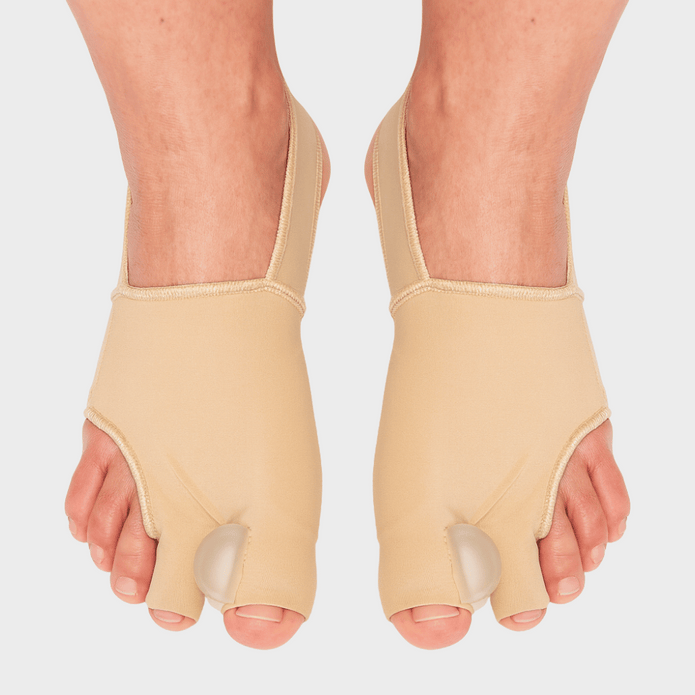
DuraFlex Bunion Sleeve Belt
View Product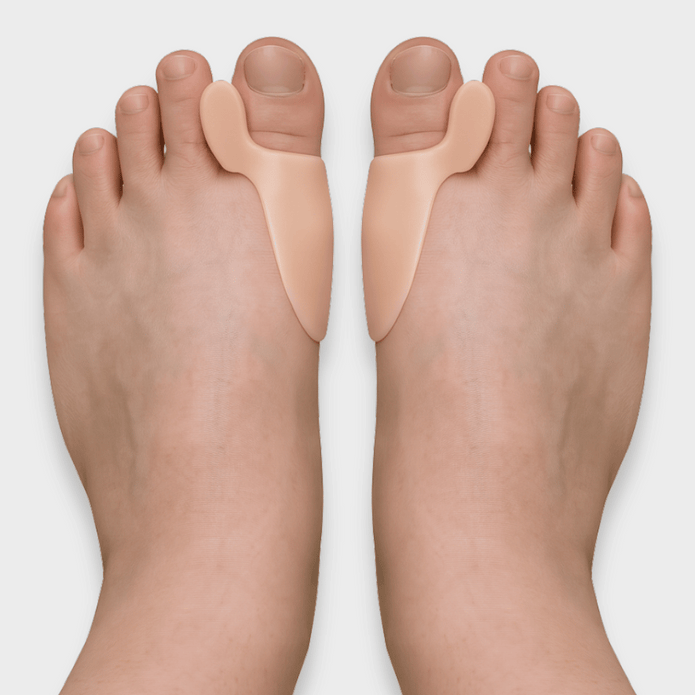
DuraFlex Gel Bunion Protectors
View ProductMechanical-Dominant
If your bunion is mechanical-dominant (e.g. caused or worsened by lifestyle factors):
Wear Foot-Friendly Shoes
- Wide toe boxes (toes shouldn’t be squeezed together)
- Low heels (high heels push weight onto the big toe joint)
- Soft, flexible uppers that don’t rub the joint
Strengthen & Mobilise Your Feet
- Perform toe-spreading exercises
- Big-toe stretches and gentle joint mobility
- Short-foot exercises to support the arch
Wear Arch Supporting Orthotics
- If you have flat feet or overpronation, custom or supportive orthotics can reduce stress on the big toe joint
- Replace worn-out shoes - collapsed soles change how your foot loads
Resolve Harmful Lifestyle Factors
- Maintain a healthy body weight
- Be cautious with activities that put repetitive pressure on the forefoot without proper footwear
Conclusion
Bunion risk can be genetic, mechanical or both. Genetics are more likely if bunions run in your family, while mechanical risk is more likely if you have flat or collapsing arches and do things that increase stress on the big toe joint.
A helpful clue is that genetic bunions often show “toe drift” before pain, whereas mechanical ones usually start with pain or callusing before visible drift. Most people have a mix of both, with genetics setting the stage and mechanics driving progression.


Leave a comment