
Are Bunions Hereditary or Genetic?

Many people with bunions wonder if the condition is hereditary or genetic (passed down to children from parents). The short answer is yes – bunions are strongly influenced by genetics, though they are not purely hereditary in every case.
We’ll briefly explore some of the genetic factors that contribute towards the development of a bunion, and how the condition even develops in people who have not inherited the genes.
Genetic/Hereditary Factors
Bunions often run in families because you can inherit:
- Foot shape or structure (e.g., flat feet, overly flexible joints)
- Biomechanical tendencies that make the big toe drift inward
- Connective-tissue traits such as lax ligaments
These inherited traits increase the likelihood of developing a bunion over time. So while you don't inherit the bunion itself, you may inherit the foot mechanics that cause it.
Other Contributing Factors (Not Genetic)
Even with a genetic predisposition, lifestyle plays a big role with the following factors contributing to the development of a bunion:
- Wearing tight, narrow or high-heeled shoes – these types of footwear increases pressure on the toe joints and can alter the structure of the foot.
- Foot injuries including sprains or tears of the ligaments around the big toe, dislocation, trauma and repeated microtrauma.
- Certain medical conditions such as rheumatoid arthritis, inflammatory conditions and neuromuscular disorders.
If you already have a foot shape that tends toward bunions (e.g. flat feet and hypermobile joints), then impact sports and prolonged standing can:
- Increase pressure on the big-toe joint
- Stress ligaments around the joint
- Encourage the toe to drift inward over time
- Make small misalignments worsen faster
These factors can accelerate bunion formation or make symptoms worse.
Our Bestselling Bunion Splints
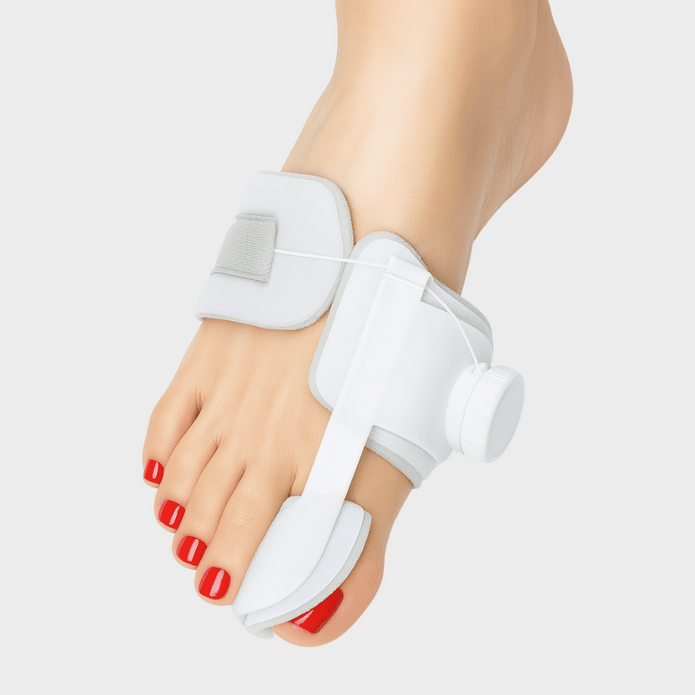
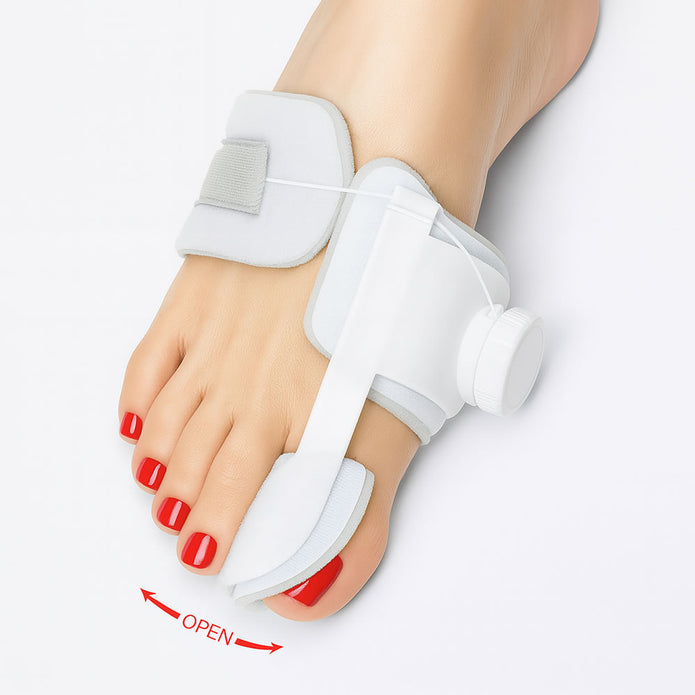
ActiveRestore Adjustable Bunion Corrector Splint
View Product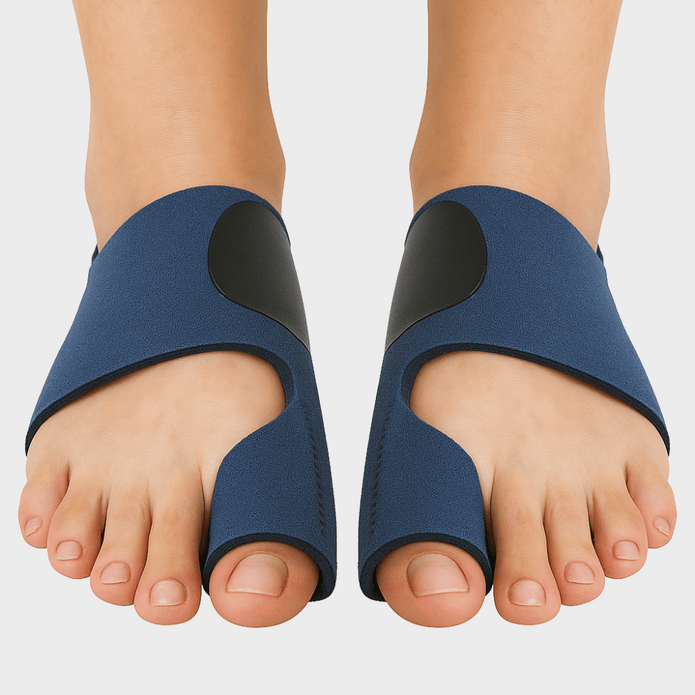
ActiveRestore Bunion Corrector Splints
View ProductHow Bunions Develop
1. Inherited Foot Mechanics Create Instability
Most bunions begin with structural tendencies you were born with such as flat feet, loose or overly flexible joints, a long first metatarsal bone, abnormal gait patterns etc.
These traits make the big toe joint less stable, allowing it to drift inward under pressure.
2. The First Metatarsal Bone Drifts Outward
A bunion begins when the first metatarsal bone (the long bone behind the big toe) starts shifting outward toward the inside of the foot.
This creates a widening angle between the first and second metatarsals called hallux valgus angle.
3. The Big Toe Tilts Toward the Other Toes
As the metatarsal shifts outward, the big toe is pushed inward toward the second toe.
This misalignment occurs because:
- Tendons and ligaments around the joint pull unevenly
- The joint becomes mechanically unstable
- Weight-bearing forces push the toe inward with each step
4. Joint Becomes Prominent and The “Bump” Forms
The visible bump is not bone growing – it's the metatarsal head sticking out as the joint becomes misaligned.
Over time the skin over the area thickens
- Bursa (fluid-filled sacs) become inflamed
- Pressure makes the bump more painful
5. External Factors Accelerate the Process
Although genetics set the stage, factors like footwear, injuries and repetitive stress can accelerate this progression.
Over time, the joint becomes more prominent, irritated and painful, turning a subtle misalignment into a noticeable deformity.
6. Progressive Worsening Without Intervention
Bunions tend to be progressive deformities, meaning they worsen over time because:
- The misalignment increases the pull on tendons
- The joint cartilage wears down
- Soft tissues contract and adapt to the abnormal position
Without effective and consistent management of the condition, bunions can lead to chronic pain, corns and calluses, overlapping toes, limited mobility and difficulty finding comfortable footwear.
Conclusion
Bunions are often hereditary because foot structure is inherited, but environmental and lifestyle factors also contribute significantly.
If bunions run in your family, preventive measures, early monitoring, and effective management and treatment can help reduce progression.


Leave a comment