
Does the NHS Recommend Toe Separators?

Toe separators are commonly used to treat foot conditions such as overlapping toes, bunions, hammer toes and calluses. They can help to naturally realign toes and alleviate pain and discomfort.
While most private podiatrists recommend them for specific conditions, there are questions on whether the NHS recommends them too.
We’ve done some digging and can tell you that yes, the NHS does acknowledge the possible role for toe separators (also called toe spacers or spreaders) as part of a non-surgical and conservative foot care.
However, they’re not presented as a “cure-all” and should be used with caution and guidance.
NHS Related Resources
The following are resources provided by the NHS regarding toe separators and their recommended use:
- The NICE Clinical Knowledge Summary (guidance produced for the NHS) for bunions suggests considering toe spacers and/or bunion pads among non-surgical options.
- An NHS podiatry leaflet in Wales states that if you can straighten your big toe without pain, a silicone toe spacer may be beneficial; but it also advises gradually building up use over a week and stopping if new pain arises.
- In the “lesser toe deformities” guidance (for toes other than the big toe), a hospital affiliated with the NHS has a patient leaflet that states “padding over pressure areas, toe separators and insoles” as non-surgical management options.
- Some NHS podiatry services produce or use mouldable silicone devices to redistribute pressure around toes. Instructions are given for correct placement, discomfort monitoring and shoe compatibility.
Our Bestselling Toe Separators
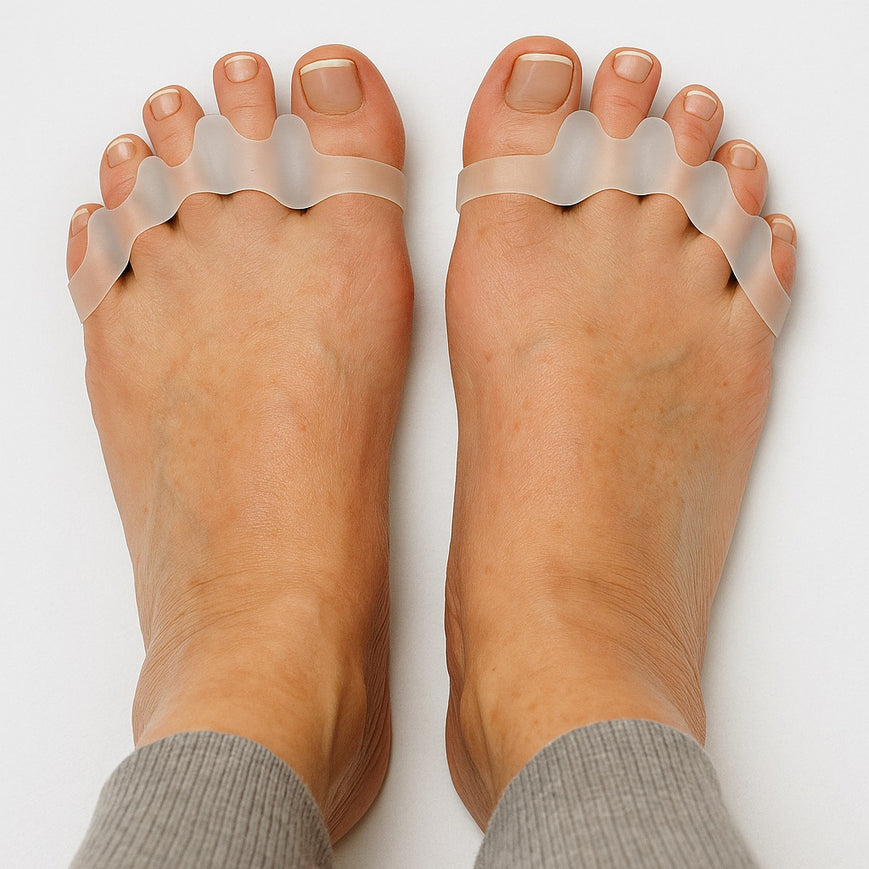

DuraFlex Gel Toe Separators
View Product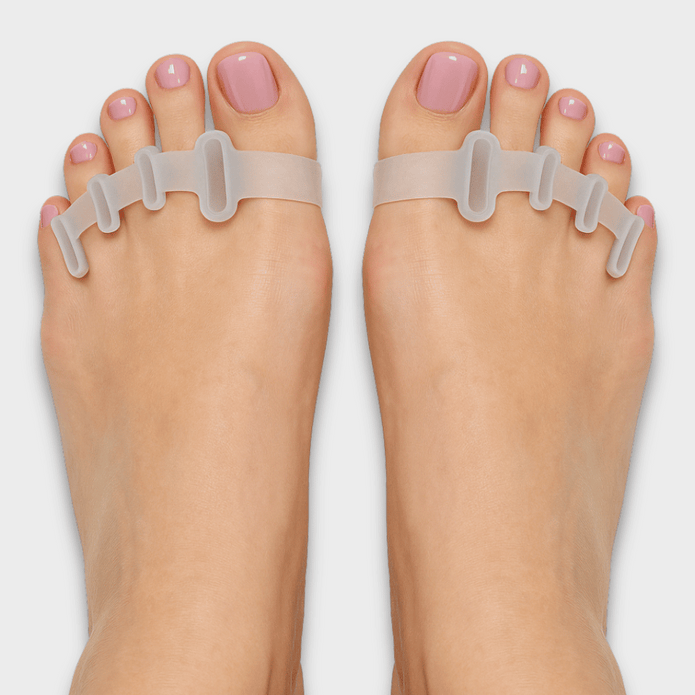
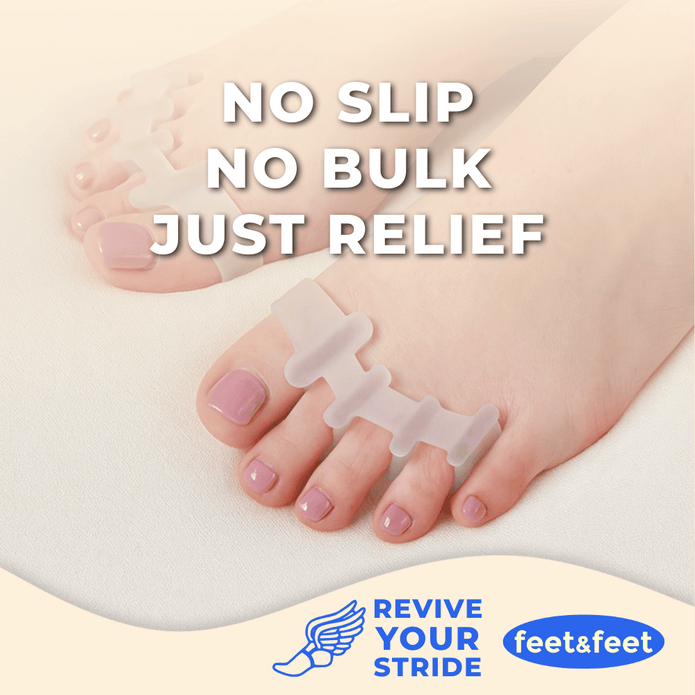
DuraFlex Slimline Gel Toe Separators V2
View ProductLimitations, Cautions and Context
Even though the NHS recommends using toe separators in many cases, they are only suggested by NHS podiatrists and doctors in specific conditions.
Some information you should note include:
- Toe separators are generally recommended as an addition, not as standalone cures. They are part of conservative (non-surgical) management. For example in mild to moderate toe deformities, pain relief or to preventing worsening.
- The guidance almost always includes caveats – start gradually, monitor for new pain or discomfort, wear appropriate shoes (with enough room for the device) and discontinue use if irritation occurs.
- They are more suitable for deformities where the toe is still somewhat mobile (i.e. not fully rigid). The Welsh leaflet explicitly says “if you can easily straighten your big toe without causing pain, you will most likely benefit from a silicone toe spacer.”
- The NHS associated guidance often pairs toe devices with other measures, especially with the correct footwear (e.g. wide toe box, low heels and soft materials) and insoles or orthotics.
- In podiatry and foot protection services, the devices are used under clinician supervision or provision, with a patient instructed on care, fitting and monitoring.
Conclusion
The NHS will tell you and we would agree that toe separators are not a blanket recommendation for everyone. Their effectiveness depends heavily on the individual’s anatomy, degree of deformity, footwear, how they are used and whether there is professional guidance.
Mild deformities, overlapping toes, bunion pain relief and pressure redistribution are some of the instances where toe separators and spacers will be more suitable.
If you’re considering using toe separators, you may want to check with a podiatrist, physiotherapist or GP to see whether they are appropriate for you.


Leave a comment