


Dr. Berg Uncovers an Instant Fix for Plantar Fasciitis

Dr. Berg makes a bold claim – plantar fasciitis pain can improve “within seconds” using a simple technique.
Instead of focusing on conventional treatments such as arch support devices or stretching the bottom of the foot, he argues these approaches can worsen inflammation.
So what’s the secret that Dr. Berg is hiding? Let’s dig deeper and see if there’s actual merit to his methods.
Rejecting Traditional Foot Stretching
Dr. Berg strongly criticises direct stretching or massaging of the plantar fascia itself.
“The worst thing you could do is to stretch...or massage the bottom of the foot.”
The explanation given is that the tissue is already inflamed and irritated, so additional pressure may tear or aggravate it further.
This flips the standard advice many people receive. Instead of targeting the painful area directly, he proposes working on the opposite muscle groups to indirectly relax the foot.
The underlying idea is neurological and mechanical – calming surrounding tension may reduce pain signals without irritating the inflamed tissue itself.
Pain Assessment Before Treatment
Before introducing the exercise, Dr. Berg instructs you to measure your pain level.
“Rate on a scale from 0 to 10 how bad your pain is.”
This creates a simple feedback system. He wants you to test whether the technique produces immediate measurable improvement.
The Main Stretching Technique
The first practical intervention involves bending the toes downward to stretch the muscles on the front of the leg rather than the plantar fascia.
“We're not stretching the calf; we're stretching the opposite muscles on the front part of your leg.”
Dr. Berg demonstrates two methods:
- Pulling the toes downward manually
- Sitting back on the heels while the feet are pointed
The explanation is based on balancing opposing muscle groups.
“You're stretching the opposite muscle and fascia.”
According to Dr. Berg, this sends signals that reduce tension and pain in the bottom of the foot, as he states that it’s like “telling the nerve signals to turn off”.
This provides immediate symptom relief. The movement is presented as safe, gentle and repeatable throughout the day.
Rechecking the Pain Level
After completing the stretch, the Dr. Berg immediately tells you to stand up and test your foot again.
“Now what I want you to do is rate the pain in your foot; you can go ahead and stand on it.”
Instead of having to wait for weeks or months for results, you can experience a real-time experiment where you can feel a difference immediately.
If this works for you, then the psychological impact of this is huge as most plantar fasciitis sufferers are used to:
- Slow recovery timelines
- Expensive treatments
- Repeated failures
- And temporary relief methods
So when Dr. Berg asks you to compare your pain level after only a short movement exercise, it creates a moment of emotional contrast.
Even a small reduction in pain can feel dramatic because the expectation was that relief would take much longer.
Our Best Insoles for Plantar Fasciitis
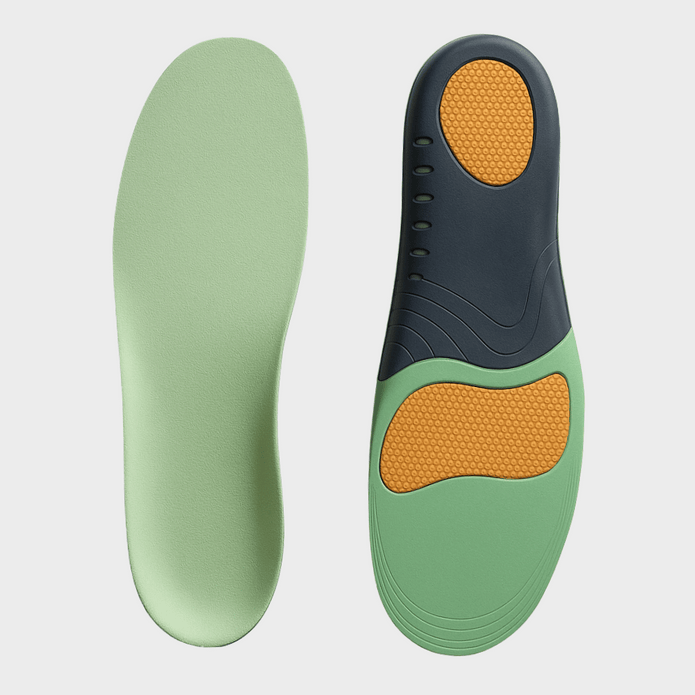

UltraSupport Plantar Fasciitis Insoles
View Product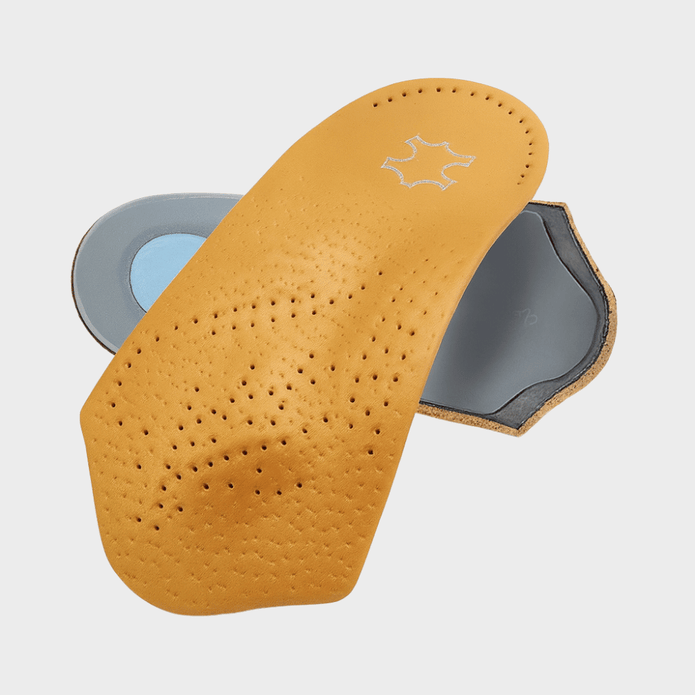
UltraSupport Plantar Fasciitis Leather Insoles
View ProductReframing Plantar Fasciitis as a Metabolic Problem
After focusing on immediate pain relief through stretching, Dr. Berg shifts the discussion away from mechanics and into metabolism and inflammation.
Low-Carb Diet and Inflammation
“The second thing I'm going to recommend is go on a low carb diet.”
This is a major turning point from physical treatment because the condition is no longer being treated as just a foot injury. Instead, the Dr. Berg reframes plantar fasciitis as part of a larger inflammatory process happening throughout the body.
The core argument is simple:
“Inflammation occurs when your carbs are too high.”
According to Dr. Berg, excessive carbohydrate intake increases inflammation and that inflammation contributes to pain in tissues like the plantar fascia.
In this view, the foot pain is not isolated – it is a symptom of systemic stress caused by diet.
The recommendation is not only low-carb eating but also intermittent fasting.
“Where you're doing intermittent fasting two meals, no snacks.”
This advice reflects a broader philosophy that he often promotes – lowering insulin levels and reducing constant blood sugar spikes may help the body recover more effectively.

Magnesium as the “Master Controller”
The third point Dr.Berg focuses on is magnesium deficiency.
“Magnesium is the master controller over calcium in the body”
He claims excess calcium accumulation contributes to plantar fasciitis and that magnesium helps regulate this imbalance.
Several ideas are emphasised:
- Magnesium deficiency often appears first in the feet
- Muscle contraction is calcium-dependent
- Tightness and cramping may relate to low magnesium
“One of the first places a magnesium deficiency will show up is in your feet”
The explanation connects back to the earlier stretch. Dr. Berg says the exercise temporarily relaxes contracted tissues, while magnesium addresses the deeper cause.
“The type of magnesium I would recommend is magnesium glycinate.”
He compares the absorption rates of Magnesium Glycinate vs. Magnesium Oxide:
- Magnesium Glycinate – “absorbed 80%”
- Magnesium Oxide – “absorbed 3 to 4%” and may cause diarrhea
Dr. Berg emphasises supplement quality rather than simply recommending magnesium generally.
The dosage recommendation is “at least 400 milligram of magnesium glycinate every single day”.
Vitamin D and Calcium Regulation
After introducing magnesium as the regulator of calcium and muscle tension, Dr. Berg shifts to vitamin D3 and presents it as one of the most powerful long-term solutions for chronic inflammation and tissue dysfunction.
“Vitamin D hands down is the most potent anti-inflammatory that you can take.”
He claims vitamin D helps remodel damaged tissue and work alongside magnesium to regulate calcium properly.
A high dosage is recommended – “20,000 IUS of vitamin D3 every single day” and he states that this amount is “equivalent to being out in the Summer sun for about 40 minutes”.
Many people associate high supplement doses with danger. By relating it to sunlight, Dr. Berg normalises the amount and frames it as biologically natural rather than extreme.
The underlying message is:
“Your body was designed to receive this level naturally through sun exposure.”
Vitamin D is portrayed almost like a master regulator that calms chronic inflammation throughout the body. The implication is that if inflammation decreases, the plantar fascia becomes less irritated, less swollen and more capable of healing properly.
What makes this persuasive is that Dr. Berg doesn’t isolate vitamin D to foot pain alone. Instead, he broadens its importance to overall health – “this goes way beyond just planet fasciitis”
That statement reframes vitamin D deficiency as a body-wide issue with symptoms appearing in multiple systems simultaneously.
The Magnesium + Vitamin D Relationship
It’s reinforced that magnesium and vitamin D depend on each other. Taking one without the other may create imbalance.
“Magnesium won't work without vitamin D and vitamin D won't work without magnesium”
Dr. Berg builds the idea of a “nutrient partnership,” suggesting that the combined effect is more powerful than either supplement alone.
The broader message is that chronic pain may stem from nutritional deficiencies rather than purely mechanical problems.
Vitamin K2 and Calcium Removal
Vitamin K2 is introduced as the final piece of the supplement strategy.
“Vitamin K2 also helps remove calcium from the soft tissues.”
Dr. Berg recommends using a vitamin D3 supplement that already includes K2. This reinforces the recurring theme of calcium mismanagement in soft tissues as a root cause of plantar fasciitis.
Together, the protocol becomes:
Magnesium glycinate
- Vitamin D3
- Vitamin K2
- Low-carb diet
- Intermittent fasting
- Stretching the opposite muscles
Final Takeaway
In this video about an “instant plantar fasciitis fix”, Dr. Berg combines three major themes into one treatment philosophy.
- Immediate Relief – Using toe-down stretches to relax opposing muscles and reduce foot pain quickly.
- Metabolic and Nutritional Healing – Reducing inflammation through low-carb eating, intermittent fasting, magnesium, vitamin D and vitamin K2.
- Long-Term Prevention – Correcting what he describes as underlying mineral imbalances to stop the pain from returning.
The overall message is that plantar fasciitis is not just a foot problem; it is connected to inflammation, muscle tension and nutrient deficiencies throughout the body.
While Dr. Berg’s stretching method to “instantly” fix plantar fasciitis is likely not a “one size fits all” solution, it’s certainly worth a try, while his advice relating to diet has been well researched and tested with positive results.


Leave a comment